When I first started blogging, this was one of my first posts. That was back in 2012, and since then, I have continued to blog and share my thoughts with our school community. I think this "old" post is still reflective of how I feel about our school so I am re-posting and updating it since so many of our families are new to our school. Happy Thanksgiving to our DKIES `ohana!
This Thanksgiving day in 2016 is a perfect opportunity to reflect on my principalship at Daniel K. Inouye Elementary School and all that I am thankful for. What makes a school special and unique is its people, and DKIES is no exception.
All of my schooling has been here in Hawaii, and I can't imagine being uprooted in the middle of the year and having to go to a new school, make new friends, learn new rules, procedures, and curriculum, and adjust to these new surroundings. Yet our DKIES students are asked to do this not once but multiple times in their school careers. More often than not, this is occurring while a parent is attending training or is deployed. Our students make the best of their situation even while they are missing a parent who may be off-island for training exercises or who may be deployed and in harm's way. I marvel at their resilience, and my hope is that they will take what they've learned at DKIES about aloha (love and compassion), lokahi (harmony and balance), kokua (extending a helping hand to others), `ohana (family), kuleana (responsibility), and malama (to take care of) and share it with others when they leave Hawaii.
I am grateful to the DKIES parents who support our school and trust us with their children. Military parents' lives are so different from what I experienced as a young mom when I had family and friends to support me. Being uprooted from their system of support is a challenge, and their confidence in our school to take care of their children is a responsibility we take seriously. To the soldier parents who have committed to serving and protecting our nation, I send my heartfelt thanks. And to the spouse who is left behind to take care of the home and the family while the soldier is absent, you deserve kudos for all you do. It takes a strong person to accept and adapt to military life and often, you turn every new change of duty station as an adventure and a learning opportunity for your family. Mahalo for all you do.
I am so honored to be at a school with such a great staff. I love going to work every day because I work with people who care about our school as much as I do. Others may not realize the challenges of working with a highly transient military population, but your commitment and pride in your work is what makes our school so special. I hope you realize the positive impact you have, long after the students and families have left DKIES and Hawaii. I am truly proud to be part of our DKIES `ohana.
3 1/2 years ago, we were one of the original schools on military bases in the United States to receive funding to upgrade and renovate our facilities. This year, all of the construction was completed, and our school was recently renamed after a great American hero from Hawaii, Daniel K. Inouye. When I first became principal of Hale Kula Elementary School in February 2003, I would never have imagined how the school would transform during my tenure. I am so appreciative to Congress and the State of Hawaii Legislature for funding our $33.2 million project, to everyone who made this project possible, and to our school community for their patience and support throughout the challenging construction phases. It is humbling to realize all that went into this project to benefit our students now and in the future.
I am truly blessed with a wonderful and loving family, supportive friends, a job that I love, good health, living in a place that many consider paradise. I couldn't ask for more.
May all of you have a wonderful Thanksgiving holiday!
Saturday, November 19, 2016

Friday, November 11, 2016
Why is It Taking So Long?
When I was in school, I never had a female administrator. My principals and vice principals from elementary school through high school were all male. They wore short-sleeved white shirts, dark pants, and dark ties and hardly ever smiled. They were feared, and the threat of being sent to the principal's office kept everyone in-check. The rumor was that there was a paddle in the office; we never knew if it was true. We just knew that we didn't want to be the one to find out.
As a kindergarten student, I decided that I wanted to be a teacher, and throughout the rest of my school years, that was my goal. I loved teaching and when I became a mother, I had to find that balance between work and family. Honestly, becoming a mom made me a better teacher and a better time manager. I had to prioritize, and family came first..
I got into educational administration only after my own sons were older; two were in college and my youngest was in middle school. While they were in their formative years, I was the chauffeur, the coach, the one who went to meetings and performances. My husband came when he could, but his job often didn't allow him to attend. I didn't mind, and now when I look back, I have so many wonderful memories. I think that's how it is with many moms.
Times have changed for girls/women since I was growing up:
As a kindergarten student, I decided that I wanted to be a teacher, and throughout the rest of my school years, that was my goal. I loved teaching and when I became a mother, I had to find that balance between work and family. Honestly, becoming a mom made me a better teacher and a better time manager. I had to prioritize, and family came first..
I got into educational administration only after my own sons were older; two were in college and my youngest was in middle school. While they were in their formative years, I was the chauffeur, the coach, the one who went to meetings and performances. My husband came when he could, but his job often didn't allow him to attend. I didn't mind, and now when I look back, I have so many wonderful memories. I think that's how it is with many moms.
Times have changed for girls/women since I was growing up:
- Traditional families back when I was little were like the Cleavers or the Nelsons. Mom stayed home and took care of the house and the kids. Dad went to work and was the primary breadwinner. Today, Moms often have to work to supplement the family income or because they are single parents.
- Title IX gives girls an equal opportunity to compete in sports. This has made a huge impact on our girls who now can receive full college scholarships for playing on an athletic team.
- Girls are encouraged to go to college and enter fields that were previously male-dominated although they are still underrepresented in fields like engineering and mathematics.
- Women can now do combat duty as members of the military.
- Since the first woman was elected to Congress in 1916 - exactly 100 years ago - 313 women have been elected. In Hawaii, 3 out of our 4 Congressional delegation are women (wow!) and presently, about 20% of the members of Congress are women. We've made advances in this area, but the number is still far from proportional.
Yet despite the advances women have made in society, we are still unable to break the glass ceiling in the United States. Other countries have elected women leaders - Indira Gandhi was elected as Prime Minister of India 50 years ago; Israel's Golda Meir was elected in 1969; and Margaret Thatcher served as Prime Minister of the United Kingdom beginning in 1979. Why is it taking so long for those of us in the United States to elect a woman President?
From my perspective, women, despite their advances, must work extra hard to gain the respect from men and other women. If we cry, we are considered weak. If we don't show emotion, we are "cold." If we choose to get input before making a decision, people criticize us for being indecisive. If we swear, that is unladylike, and sometimes, a woman's opinions is drowned out simply because she is outnumbered. And her appearance? The public can be so critical and cruel.
I am quite certain that the first female principals had to prove themselves. They probably had to be extra tough to show that they could do the job. As time passed and more women were appointed to educational leadership positions, the principalship became less about being tough and more about being collaborative and working with school communities to ensure that children were learning in a safe, nurturing environment. Today, we probably have an equal number of male and female principals, and I am grateful for those first women principals for paving the way for others like me.
One day soon, I hope our country will elect a woman President. When she proves that she can lead the country - her way - she will pave the way for others to follow and serve as a role model for girls and young women.
I hope to see that happen in my lifetime.
From my perspective, women, despite their advances, must work extra hard to gain the respect from men and other women. If we cry, we are considered weak. If we don't show emotion, we are "cold." If we choose to get input before making a decision, people criticize us for being indecisive. If we swear, that is unladylike, and sometimes, a woman's opinions is drowned out simply because she is outnumbered. And her appearance? The public can be so critical and cruel.
I am quite certain that the first female principals had to prove themselves. They probably had to be extra tough to show that they could do the job. As time passed and more women were appointed to educational leadership positions, the principalship became less about being tough and more about being collaborative and working with school communities to ensure that children were learning in a safe, nurturing environment. Today, we probably have an equal number of male and female principals, and I am grateful for those first women principals for paving the way for others like me.
One day soon, I hope our country will elect a woman President. When she proves that she can lead the country - her way - she will pave the way for others to follow and serve as a role model for girls and young women.
I hope to see that happen in my lifetime.
Sunday, November 6, 2016
Collaborative Leadership - Reflections
Last weekend, I read Collaborative Leadership by Peter DeWitt. I never know if I'll finish a professional book I start. My preference recently has been to read blogs rather than books, but this book was different. I kept reading, taking notes, and reflecting, something I haven't done in awhile. Before the weekend ended, I had finished reading the book.
Peter is someone I follow regularly on Twitter and Facebook, and I look forward to reading his blog, Finding Common Ground. Every so often, I'll comment on his blog or I send him an email if I don't want my comment published. Peter always responds honestly (even though he's probably very busy) and therefore, I looked forward to reading his latest book. I told Peter I would let him know what I thought of the book, but I was having a difficult time getting my thoughts down on paper. It sounded more like a paper for college, and that was certainly not my intention.
This morning, I checked my Facebook page and saw this blog, "I hear of teachers crying on their kitchen floor because of stress" and read the numerous comments from teachers who were feeling undervalued and overworked. At that moment, I knew that this was exactly what I needed to write about the impact of Collaborative Leadership on me.
Teaching is challenging, and this year, more than any other since I've been a principal, that point has been hammered home. We lost three new teachers due to the heavy work load and inability for them to find the balance between their personal life and school. I thought we were "collaborative" and even though we "trained" these new teachers prior to the start of school, there were so many more questions and concerns that they had. Added to the stress were students with challenging behaviors that made it even more difficult to teach. Peter shares a blog he wrote back in January 2014 about "10 Critical Issues Facing Education" and today, in November 2016, those issues are still relevant. That list doesn't even include unique issues a school faces. In our case, it is transiency as well as deployments that impact our school community.
A principal cannot make major decisions in isolation. One of the best decisions we made collaboratively as a school was to seek accreditation. It was not easy to get buy-in from everyone, but at the time, we were discussing ways to address the perception that our Hawaii schools were substandard. We believed that accreditation would validate what we were doing to address the questions: Are students learning? How do you know? What do you do if students are not learning? In other words, the focus was on learning. The self-study was rough; we realized that we had 'pukas' - holes - that we needed to address as a school, but overall, we were doing a pretty good job of educating our students, 98% of whom are military dependents who don't stay in one school for very long. Since that initial self-study, we've gone through a mid-term progress report and another accreditation self-study. Each time we look back at where we had started, we are amazed at what we have accomplished as a school community regarding teaching and learning.
We are in the process of determining our Financial Plan for next school year, and as usual, we will be conservative because we never know whether we will meet our projected enrollment which our FP is based on. However, we will have a discussion about our focus on learning and how we can best meet the needs of our students while also ensuring that teachers continue to develop their pedagogy and other essential skills in this 21st century world. For this reason, we are transitioning to project-based learning, integrating content area standards and focusing on inquiry with students asking as well as answering higher-level questions. Our school-wide data also indicates a need for professional development in teaching math for understanding and problem-solving. We value our staff and we must provide meaningful professional development to increase their efficacy so they can increase student learning and student efficacy.
Although we use social media and hold school-wide or grade level events to engage families, we can do even more. When I taught Head Start many years ago, parents were encouraged to volunteer in the classroom so they could learn skills and strategies they could use with their children at home. Because these were low-income families, it was essential for these parents to understand their importance as their child's first teacher and to give their children a "head start" when they enrolled in kindergarten. I learned that when teachers invite parents to help in their classrooms, the benefits are many. Family engagement increases trust in the school, builds positive home-school relationships, and positively impacts student achievement.
At our school, teachers are empowered to be innovative and to try new ideas with their students. Most of our weekly meeting time is devoted to teachers learning together or from each other, and we provide substitute days so teachers can collaborate to plan instruction or share ideas, review student work, analyze data, and determine next steps. But that is not sufficient. In the best possible scenario, teachers would observe in each other's classrooms, have time during the school day to co-plan lessons, implement and then reflect on those lessons, meet with mentor teachers or Instructional Coaches, as well as prepare for future lessons. How can we make this happen?
We need to have collaborative discussions. As we look ahead to future meetings and discussions regarding this topic, we need to be open to new ideas (including how we allocate our funds) and trying out new ways of teaching and learning. There is still much to be done. We are still in the process of understanding what it means to be assessment-capable learners, and one of our priorities is creating a more effective system to give and receive feedback from all members of the school community. Another topic of discussion is how to personalize professional development for our staff in order to build their efficacy.
We still have much to work on, but I am confident that if we go into a meeting with one plan or idea, we will leave the meeting with something better. As Helen Keller stated, "Alone we can do so little; together we can do so much." We want teachers to feel confident about their ability to positively impact student learning. It will take collaborative leadership and trusting relationships to build a learning community in every classroom throughout our school.
Thank you, Peter DeWitt, for providing me with this opportunity to reflect on my practices as a school leader.
Peter is someone I follow regularly on Twitter and Facebook, and I look forward to reading his blog, Finding Common Ground. Every so often, I'll comment on his blog or I send him an email if I don't want my comment published. Peter always responds honestly (even though he's probably very busy) and therefore, I looked forward to reading his latest book. I told Peter I would let him know what I thought of the book, but I was having a difficult time getting my thoughts down on paper. It sounded more like a paper for college, and that was certainly not my intention.
This morning, I checked my Facebook page and saw this blog, "I hear of teachers crying on their kitchen floor because of stress" and read the numerous comments from teachers who were feeling undervalued and overworked. At that moment, I knew that this was exactly what I needed to write about the impact of Collaborative Leadership on me.
Teaching is challenging, and this year, more than any other since I've been a principal, that point has been hammered home. We lost three new teachers due to the heavy work load and inability for them to find the balance between their personal life and school. I thought we were "collaborative" and even though we "trained" these new teachers prior to the start of school, there were so many more questions and concerns that they had. Added to the stress were students with challenging behaviors that made it even more difficult to teach. Peter shares a blog he wrote back in January 2014 about "10 Critical Issues Facing Education" and today, in November 2016, those issues are still relevant. That list doesn't even include unique issues a school faces. In our case, it is transiency as well as deployments that impact our school community.
A principal cannot make major decisions in isolation. One of the best decisions we made collaboratively as a school was to seek accreditation. It was not easy to get buy-in from everyone, but at the time, we were discussing ways to address the perception that our Hawaii schools were substandard. We believed that accreditation would validate what we were doing to address the questions: Are students learning? How do you know? What do you do if students are not learning? In other words, the focus was on learning. The self-study was rough; we realized that we had 'pukas' - holes - that we needed to address as a school, but overall, we were doing a pretty good job of educating our students, 98% of whom are military dependents who don't stay in one school for very long. Since that initial self-study, we've gone through a mid-term progress report and another accreditation self-study. Each time we look back at where we had started, we are amazed at what we have accomplished as a school community regarding teaching and learning.
We are in the process of determining our Financial Plan for next school year, and as usual, we will be conservative because we never know whether we will meet our projected enrollment which our FP is based on. However, we will have a discussion about our focus on learning and how we can best meet the needs of our students while also ensuring that teachers continue to develop their pedagogy and other essential skills in this 21st century world. For this reason, we are transitioning to project-based learning, integrating content area standards and focusing on inquiry with students asking as well as answering higher-level questions. Our school-wide data also indicates a need for professional development in teaching math for understanding and problem-solving. We value our staff and we must provide meaningful professional development to increase their efficacy so they can increase student learning and student efficacy.
Although we use social media and hold school-wide or grade level events to engage families, we can do even more. When I taught Head Start many years ago, parents were encouraged to volunteer in the classroom so they could learn skills and strategies they could use with their children at home. Because these were low-income families, it was essential for these parents to understand their importance as their child's first teacher and to give their children a "head start" when they enrolled in kindergarten. I learned that when teachers invite parents to help in their classrooms, the benefits are many. Family engagement increases trust in the school, builds positive home-school relationships, and positively impacts student achievement.
At our school, teachers are empowered to be innovative and to try new ideas with their students. Most of our weekly meeting time is devoted to teachers learning together or from each other, and we provide substitute days so teachers can collaborate to plan instruction or share ideas, review student work, analyze data, and determine next steps. But that is not sufficient. In the best possible scenario, teachers would observe in each other's classrooms, have time during the school day to co-plan lessons, implement and then reflect on those lessons, meet with mentor teachers or Instructional Coaches, as well as prepare for future lessons. How can we make this happen?
We need to have collaborative discussions. As we look ahead to future meetings and discussions regarding this topic, we need to be open to new ideas (including how we allocate our funds) and trying out new ways of teaching and learning. There is still much to be done. We are still in the process of understanding what it means to be assessment-capable learners, and one of our priorities is creating a more effective system to give and receive feedback from all members of the school community. Another topic of discussion is how to personalize professional development for our staff in order to build their efficacy.
We still have much to work on, but I am confident that if we go into a meeting with one plan or idea, we will leave the meeting with something better. As Helen Keller stated, "Alone we can do so little; together we can do so much." We want teachers to feel confident about their ability to positively impact student learning. It will take collaborative leadership and trusting relationships to build a learning community in every classroom throughout our school.
Thank you, Peter DeWitt, for providing me with this opportunity to reflect on my practices as a school leader.
Saturday, October 22, 2016
A New Beginning . . .
I thought I'd share a post I wrote for my blog about our $33.2 million construction project that just completed. On Monday, October 17, we had an event at our school to celebrate the completion of the project as well as the renaming of our school. Here's the blog post:
Back on June 13, 2013, I published the first post in this blog and titled it "The Beginning." 3 years, 4 months later, this will be the final post on this blog. Our project has officially ended with the dedication of the last two buildings as well as the renaming of our school.
This has been a journey, one that began with high hopes and certainly didn't disappoint. Our final buildings are fabulous! At our celebration on Monday, October 17, Major General Cavoli from the 25th Infantry Division, stated that they might be the nicest buildings on Schofield right now.
Throughout this project, I was a learner with minimal prior knowledge. I had lots to learn. Using the charrette process, we were able to share our ideas to design our buildings, and our ideas came to fruition during the construction process. There were change orders, delays in shipment, and weather delays, and the school had to endure the challenges of noise, dust, and barricades. As each new building reached completion, I marveled at the construction process and all the workers who make a project come to life. Believe me, I will never look at a construction project in quite the same way; I realize how magical it is to take materials and turn them into a building that can transform people's lives. In our case, these new buildings will transform our teaching and learning at DKIES.
Most importantly, though, I learned that in any job, collaboration is key to success. We couldn't have asked for a better team. They were patient with my endless questions and explained things in layman's terms so I could understand; that was helpful as I updated this blog. They knew that this was a big project, the first in our public school system that was funded 80% by DOD-OEA and 20% by the State, and we all wanted it to be a model for 21st century teaching and learning. I want to thank all those at S&M Sakamoto, Design Partners, Inc., Bowers & Kubota, the Department of Education, and US Army Garrison, Hawaii for being such great partners with us throughout this project.
When we broke ground on July 1, 2013, we were Hale Kula Elementary School. At the end of the project, we are Daniel K. Inouye Elementary School after the Board of Education approved a new name for our school. Now that the $33.2 million construction project is over and our new name is official, it is truly "a new beginning."
Links: Star Advertiser article
Hawaii News Now
KHON News
KITV News
Department of Education News Release
Hawaii Army Weekly
Back on June 13, 2013, I published the first post in this blog and titled it "The Beginning." 3 years, 4 months later, this will be the final post on this blog. Our project has officially ended with the dedication of the last two buildings as well as the renaming of our school.
This has been a journey, one that began with high hopes and certainly didn't disappoint. Our final buildings are fabulous! At our celebration on Monday, October 17, Major General Cavoli from the 25th Infantry Division, stated that they might be the nicest buildings on Schofield right now.
Throughout this project, I was a learner with minimal prior knowledge. I had lots to learn. Using the charrette process, we were able to share our ideas to design our buildings, and our ideas came to fruition during the construction process. There were change orders, delays in shipment, and weather delays, and the school had to endure the challenges of noise, dust, and barricades. As each new building reached completion, I marveled at the construction process and all the workers who make a project come to life. Believe me, I will never look at a construction project in quite the same way; I realize how magical it is to take materials and turn them into a building that can transform people's lives. In our case, these new buildings will transform our teaching and learning at DKIES.
Most importantly, though, I learned that in any job, collaboration is key to success. We couldn't have asked for a better team. They were patient with my endless questions and explained things in layman's terms so I could understand; that was helpful as I updated this blog. They knew that this was a big project, the first in our public school system that was funded 80% by DOD-OEA and 20% by the State, and we all wanted it to be a model for 21st century teaching and learning. I want to thank all those at S&M Sakamoto, Design Partners, Inc., Bowers & Kubota, the Department of Education, and US Army Garrison, Hawaii for being such great partners with us throughout this project.
When we broke ground on July 1, 2013, we were Hale Kula Elementary School. At the end of the project, we are Daniel K. Inouye Elementary School after the Board of Education approved a new name for our school. Now that the $33.2 million construction project is over and our new name is official, it is truly "a new beginning."
Links: Star Advertiser article
Hawaii News Now
KHON News
KITV News
Department of Education News Release
Hawaii Army Weekly
 |
| My brother, Roy, my Mom, and my husband Randy were able to join us for the event. This was the first time my Mom had seen the project she'd been hearing about. I was glad she got to see our "new" school. She and my Dad encouraged me to become an educator, a decision I have never regretted. We are with Ken and Jessica Inouye in our beautiful new library. |
 |
| U.S. Senator Mazie Hirono was at the groundbreaking on July 1, 2013, and she was also present for the completion of our project and the renaming of our school. |
 |
| We were honored to have Ken Inouye, the only son of Daniel K. Inouye, speak about his Dad and what he learned from him. |
 |
| Superintendent Matayoshi, First Lady Ige, U.S. Senator Hirono, Ken Inouye, student MC Caroline Lefaoseu, and MG Cavoli joined me in untying the maile lei. |
 |
| We are so honored to have this display case that was donated to our school by the Daniel K. Inouye Institute. The case is filled with memorabilia that shares the legacy of Daniel K. Inouye so students now and in the future will be proud to attend the school that bears his name. |
Sunday, October 16, 2016
All Schools Deserve to Be Upgraded
Tomorrow, we officially celebrate the completion of the final phase of our 3+ year project to upgrade our school as well as the renaming of our school to Daniel K. Inouye Elementary School. As I reflect on our journey as the first school in Hawaii to qualify for the DOD-OEA funding for schools on military bases across the country, I realize that we have a responsibility to share our journey, to celebrate our success, and to hopefully make it possible to create a system that allows private-public partnerships to upgrade our schools in Hawaii.
After President Obama was first elected, military parents met with Secretary of Defense Gates to share their concerns over the poor condition of schools on base. A facilities assessment was undertaken on all schools located on military bases in the country, and after a rating scale based on "condition" and "capacity," our school was #9 on the list of 157 schools. That started a whirlwind process to apply for a a DOD-OEA grant to receive funding (80% of the project cost) to address areas of need in the assessment. (Slideshow) Senator Daniel K. Inouye was instrumental in passage of a Congressional allocation of $250 million in what would be one of his last major measures passed as the Senate Appropriations Committee Chairperson. Through a charrette process involving a design team, Department of Education as well as school staff, and the military, we created 21st century buildings where students are able to collaborate and communicate with others not just within their classroom but globally as well and where critical thinking and creating are emphasized
On July 1, 2013, we held a groundbreaking ceremony, and a little more than three years later, our project is completed. Throughout the 3-phase process, I updated our community via a blog. We realized that many of our students and their families would not be at our school to follow our progress to upgrade our facilities. As each phase was completed, I would ask myself how we got so lucky to be able to rebuild and renovate our school.
As a school located on a military base, we were fortunate to be able to access federal funds to address concerns noted in the facilities assessment. 80% of the cost was provided by the DOD-OEA grant, and 20% was funded via a State Legislative appropriation to our Department. For $6.6 million in State funds, we now have an Administrative Building that is much larger than the old one that was built in 1959. Our 10-classroom building with flexible learning spaces are so much more conducive to learning than the portable classrooms we were using. .Our library is spacious and the available resources as well as the Makerspace will empower our students to explore, discover, create and share. Counselors and our School Mental Health Team from Tripler Army Medical Center have their own rooms for privacy (previously, they all shared a room), and now, we can meet as a faculty in a meeting room rather than in the cafeteria. And our covered play court? I pinch myself every time I go there. Our physical education teachers and our students will make great use of this facility, and we now have a place for our whole school to gather for assemblies and events.
But shouldn't all schools - not just schools on military bases - be able to re-invent and upgrade their school facilities? (Right now, Solomon Elementary and Mokapu Elementary are waiting to hear if they are receiving funding for their schools.) So many of our schools need to be renovated or upgraded, and funding from the Legislature is limited. We need to think of other ways to upgrade our schools, many of which are already 50+ years old.
The Hawaii Institute for Public Affairs examined the issue of private-public partnerships to build 21st century schools for Hawaii's students and shared their ideas in "Systemic Approach to Building 21st Century Schools: Experiences in the Aloha State." Although a bill was passed by the State Legislature and signed by the Governor, in 2011, we have not yet seen the impact on our schools. In fact, communities and legislators have to "fight" to get their share of funding to upgrade or to build new schools in growing communities, and the cost continues to increase each year.
When I became principal of our school in February 2003, I never dreamed that we would ever be allocated funds to upgrade our facilities. Now that our project is completed, I hope that our positive experience will start the discussion on how to provide this kind of opportunity for other schools that were built for a different generation of students. All students deserve it.
After President Obama was first elected, military parents met with Secretary of Defense Gates to share their concerns over the poor condition of schools on base. A facilities assessment was undertaken on all schools located on military bases in the country, and after a rating scale based on "condition" and "capacity," our school was #9 on the list of 157 schools. That started a whirlwind process to apply for a a DOD-OEA grant to receive funding (80% of the project cost) to address areas of need in the assessment. (Slideshow) Senator Daniel K. Inouye was instrumental in passage of a Congressional allocation of $250 million in what would be one of his last major measures passed as the Senate Appropriations Committee Chairperson. Through a charrette process involving a design team, Department of Education as well as school staff, and the military, we created 21st century buildings where students are able to collaborate and communicate with others not just within their classroom but globally as well and where critical thinking and creating are emphasized
On July 1, 2013, we held a groundbreaking ceremony, and a little more than three years later, our project is completed. Throughout the 3-phase process, I updated our community via a blog. We realized that many of our students and their families would not be at our school to follow our progress to upgrade our facilities. As each phase was completed, I would ask myself how we got so lucky to be able to rebuild and renovate our school.
As a school located on a military base, we were fortunate to be able to access federal funds to address concerns noted in the facilities assessment. 80% of the cost was provided by the DOD-OEA grant, and 20% was funded via a State Legislative appropriation to our Department. For $6.6 million in State funds, we now have an Administrative Building that is much larger than the old one that was built in 1959. Our 10-classroom building with flexible learning spaces are so much more conducive to learning than the portable classrooms we were using. .Our library is spacious and the available resources as well as the Makerspace will empower our students to explore, discover, create and share. Counselors and our School Mental Health Team from Tripler Army Medical Center have their own rooms for privacy (previously, they all shared a room), and now, we can meet as a faculty in a meeting room rather than in the cafeteria. And our covered play court? I pinch myself every time I go there. Our physical education teachers and our students will make great use of this facility, and we now have a place for our whole school to gather for assemblies and events.
But shouldn't all schools - not just schools on military bases - be able to re-invent and upgrade their school facilities? (Right now, Solomon Elementary and Mokapu Elementary are waiting to hear if they are receiving funding for their schools.) So many of our schools need to be renovated or upgraded, and funding from the Legislature is limited. We need to think of other ways to upgrade our schools, many of which are already 50+ years old.
The Hawaii Institute for Public Affairs examined the issue of private-public partnerships to build 21st century schools for Hawaii's students and shared their ideas in "Systemic Approach to Building 21st Century Schools: Experiences in the Aloha State." Although a bill was passed by the State Legislature and signed by the Governor, in 2011, we have not yet seen the impact on our schools. In fact, communities and legislators have to "fight" to get their share of funding to upgrade or to build new schools in growing communities, and the cost continues to increase each year.
When I became principal of our school in February 2003, I never dreamed that we would ever be allocated funds to upgrade our facilities. Now that our project is completed, I hope that our positive experience will start the discussion on how to provide this kind of opportunity for other schools that were built for a different generation of students. All students deserve it.
 |
| Our Administration Building was the Phase I. The building was completed in July 2014, one year after groundbreaking. |
 |
| The 10-classroom building was Phase II and was completed in time to start the 2015-2016 school year. This building won the Masons Institute Award for the Best Project of the Year. Here's a link to the presentation that was prepared by Design Partners, Inc. |
 |
| Phase III included the library media and student support center located in the front of the school. Notice the new school name on the front of the building. |
 |
 |
The covered play court was also part of Phase III. Now we have a place for assemblies for the whole school.
Wednesday, October 5, 2016
Continuously Learning in this Connected World
This is our last week for Quarter 1; I think the Department was wise to build in breaks after each quarter. I think we all are looking forward to Fall Break next week.
As I am in the twilight of my career, I think it's safe to say that I've still got so much more to learn as an educator and a school principal.I reflect on the early years when most of my learning came from books or professional magazines or from other educators or school leaders here in Hawaii. Today, I learn every day through my professional learning community on Twitter, Google+, or Facebook. It is amazing to me how accessible information is, and anytime there is a problem or concern that I want to learn more about, I can ask my own questions, explore, and discover information via social media. My perspective on how to be an effective school leader has been impacted as a result of my personal learning network.
Last Tuesday, we had a team from our school attend the Leadership Symposium (#HIDOELead). I don't go to many conferences or symposiums anymore, but this event confirmed our school's continued journey to prepare our students for their future.
George Couros was the keynote speaker for the Leadership Symposium, and when I read that he would be presenting, I immediately signed up a team to attend. I've been following George for years and was part of his #SAVMP project to virtually mentor new principals. I totally enjoyed his presentation at ISTE in Atlanta, and recently, I'd read and discussed The Innovator's Mindset with some of our staff. I marvel at George's ability to capture an audience, to change our mindsets about our own learning, and to make us laugh while occasionally making us teary. His presentations are entertaining, but they are also meaningful and we take away what is most applicable to us. I loved how George took a newbie Twitter user and within the breakout session, and with George's mentoring, her PLN had immediately expanded. Through the process, everyone in the room could follow along and expand their own network.
I've connected with and subscribe to innovative educators like Eric Sheninger, Peter DeWitt, John Spencer, and A.J. Juliani. Recently, I subscribed to Thomas C. Murray after reading his powerful blog, "One Nice Thing." There are so many great educators out there trying new ideas and sharing them via social media. When I first started as an educator, we didn't have the opportunity to learn 24-7 in such an individualized way. I love being able to check out posts or tweets from other educators. It's impossible to read everything, but it is possible to click the link, scan the article or post, and decide if it's something I want to explore further.
I encourage our teachers and principal colleagues to be connected. I've shared at poster sessions about how we use technology to connect with our school community. Now we need to continue to grow in this area and to convince our teachers that being connected is imperative in our ever-changing world.
As I am in the twilight of my career, I think it's safe to say that I've still got so much more to learn as an educator and a school principal.I reflect on the early years when most of my learning came from books or professional magazines or from other educators or school leaders here in Hawaii. Today, I learn every day through my professional learning community on Twitter, Google+, or Facebook. It is amazing to me how accessible information is, and anytime there is a problem or concern that I want to learn more about, I can ask my own questions, explore, and discover information via social media. My perspective on how to be an effective school leader has been impacted as a result of my personal learning network.
Last Tuesday, we had a team from our school attend the Leadership Symposium (#HIDOELead). I don't go to many conferences or symposiums anymore, but this event confirmed our school's continued journey to prepare our students for their future.
George Couros was the keynote speaker for the Leadership Symposium, and when I read that he would be presenting, I immediately signed up a team to attend. I've been following George for years and was part of his #SAVMP project to virtually mentor new principals. I totally enjoyed his presentation at ISTE in Atlanta, and recently, I'd read and discussed The Innovator's Mindset with some of our staff. I marvel at George's ability to capture an audience, to change our mindsets about our own learning, and to make us laugh while occasionally making us teary. His presentations are entertaining, but they are also meaningful and we take away what is most applicable to us. I loved how George took a newbie Twitter user and within the breakout session, and with George's mentoring, her PLN had immediately expanded. Through the process, everyone in the room could follow along and expand their own network.
I've connected with and subscribe to innovative educators like Eric Sheninger, Peter DeWitt, John Spencer, and A.J. Juliani. Recently, I subscribed to Thomas C. Murray after reading his powerful blog, "One Nice Thing." There are so many great educators out there trying new ideas and sharing them via social media. When I first started as an educator, we didn't have the opportunity to learn 24-7 in such an individualized way. I love being able to check out posts or tweets from other educators. It's impossible to read everything, but it is possible to click the link, scan the article or post, and decide if it's something I want to explore further.
I encourage our teachers and principal colleagues to be connected. I've shared at poster sessions about how we use technology to connect with our school community. Now we need to continue to grow in this area and to convince our teachers that being connected is imperative in our ever-changing world.
 |
| With @gcouros, @hawaiiest, and @cputz808 at the Leadership Symposium. |
Sunday, September 4, 2016
Mentoring Might Not Be Enough
Last month, I blogged about hiring 14 teachers for this school year (Support for New Teachers), and I shared that we were committed to providing them with support so they can be successful. We feel confident that we chose the right people for our school and our students.
Well, within the first month, two teachers came to tell me that they would have to resign due to child care issues as well as feeling overwhelmed by the expectations at our school. I felt really bad, but as I always tell my staff, family comes first. So reluctantly, I accepted their resignations.
Relocating to Hawaii is not easy. Although we have so many positives - lovely weather most of the time, friendly people, year-round sports, beautiful beaches, different cultures with a variety of customs, holidays, and food - it is difficult to get by on a teacher's salary. Our new teachers are finding out that their take-home pay barely covers the rent, the cost of their vehicle, food, and other necessities. They are also finding that it's difficult to keep up with reading their emails, doing all the required beginning-of-year assignments, and learning the curricular expectations while trying to manage the individual students in their classrooms who have different strengths and challenges.
We are proud that we have systems in place and handbooks with information about school policies and procedures. We have a Faculty Handbook, a Crisis Management and Safety Guide, and grade level handbooks and matrices so new teachers can see the grade level expectations. We have a Positive Behavior Intervention Support handbook so anyone new to our school can understand our PBIS system. Grade level colleagues are willing to assist and support the new teachers as they make their transition to our school, and all teachers with less than 3 years of teaching experience (here or in another state) are provided a mentor teacher who has had or is undergoing extensive training so they can effectively support our newbies.
As I was discussing the concerns for our new teachers, my vice principal said something that totally made sense. "Think of Maslow's Hierarchy," she pointed out. "They're worried about basic needs - housing, child care, their paychecks. Those are basic needs, and they can't get to the top of the triangle if these basic needs are not met."
I think I hit my forehead as that made so much sense! It's not something we have total control over, but we can make things better for our new teachers. We can't do anything about their paycheck, or their rent, or child care (although we can try to help them make connections), but we can provide them with more support at our school.
So first, we will give our new teachers additional time by hiring substitutes so they can meet with their Instructional Coach, mentor teacher, or the tech team. We will let them decide who they would like to meet with or what they need more support with. They may need the time to review resources, plan their lessons, or visit other classrooms. The important thing is that they will determine what support would be most useful for them, and we will provide it.
Secondly, we will survey our new teachers to see if they would like us to give them a hard copy of important emails or the Staff Bulletin; right now, they're expected to get them electronically. If these are important, then we need to make sure they get a copy especially if they're struggling to find the time to read them. That way, they will be up-do-date on what's happening at the school or what deadlines are coming up.
Third, we have identified four mentor teachers who are committed to working with our new teachers. We appreciate that they are willing to take on this responsibility in addition to their other duties as classroom or resource teachers. They are trained or receiving induction and mentoring training from District staff, and are committed to helping our new teachers. As I read articles about what qualities mentor teachers possess, I know that we have the right mentors in place. We will set aside funds to provide time for our new teachers to meet as a professional learning community with their mentor teachers. New teachers need the opportunity to not only vent, but to learn together and to realize that they can provide great support for each other.
We continue to seek ways to meet the needs of every teacher at our school, but just as we differentiate for our students, our teachers also need targeted support to be successful. Studies show that providing support for new teachers can make a difference in whether they stay in the profession or leave. We believe that all of our teachers can make a positive difference for their students, and we do not want them to leave the profession.
Well, within the first month, two teachers came to tell me that they would have to resign due to child care issues as well as feeling overwhelmed by the expectations at our school. I felt really bad, but as I always tell my staff, family comes first. So reluctantly, I accepted their resignations.
Relocating to Hawaii is not easy. Although we have so many positives - lovely weather most of the time, friendly people, year-round sports, beautiful beaches, different cultures with a variety of customs, holidays, and food - it is difficult to get by on a teacher's salary. Our new teachers are finding out that their take-home pay barely covers the rent, the cost of their vehicle, food, and other necessities. They are also finding that it's difficult to keep up with reading their emails, doing all the required beginning-of-year assignments, and learning the curricular expectations while trying to manage the individual students in their classrooms who have different strengths and challenges.
We are proud that we have systems in place and handbooks with information about school policies and procedures. We have a Faculty Handbook, a Crisis Management and Safety Guide, and grade level handbooks and matrices so new teachers can see the grade level expectations. We have a Positive Behavior Intervention Support handbook so anyone new to our school can understand our PBIS system. Grade level colleagues are willing to assist and support the new teachers as they make their transition to our school, and all teachers with less than 3 years of teaching experience (here or in another state) are provided a mentor teacher who has had or is undergoing extensive training so they can effectively support our newbies.
As I was discussing the concerns for our new teachers, my vice principal said something that totally made sense. "Think of Maslow's Hierarchy," she pointed out. "They're worried about basic needs - housing, child care, their paychecks. Those are basic needs, and they can't get to the top of the triangle if these basic needs are not met."
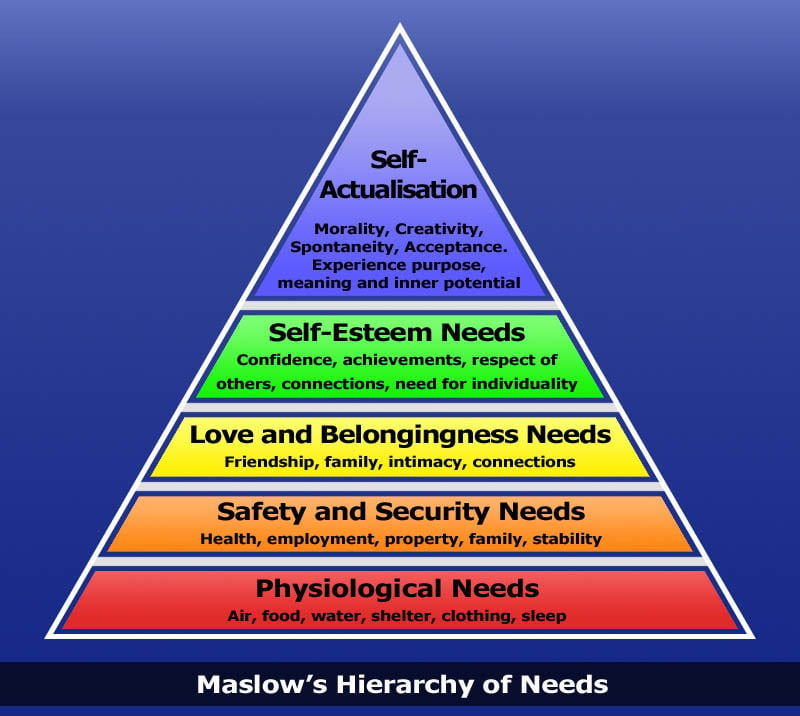
I think I hit my forehead as that made so much sense! It's not something we have total control over, but we can make things better for our new teachers. We can't do anything about their paycheck, or their rent, or child care (although we can try to help them make connections), but we can provide them with more support at our school.
So first, we will give our new teachers additional time by hiring substitutes so they can meet with their Instructional Coach, mentor teacher, or the tech team. We will let them decide who they would like to meet with or what they need more support with. They may need the time to review resources, plan their lessons, or visit other classrooms. The important thing is that they will determine what support would be most useful for them, and we will provide it.
Secondly, we will survey our new teachers to see if they would like us to give them a hard copy of important emails or the Staff Bulletin; right now, they're expected to get them electronically. If these are important, then we need to make sure they get a copy especially if they're struggling to find the time to read them. That way, they will be up-do-date on what's happening at the school or what deadlines are coming up.
Third, we have identified four mentor teachers who are committed to working with our new teachers. We appreciate that they are willing to take on this responsibility in addition to their other duties as classroom or resource teachers. They are trained or receiving induction and mentoring training from District staff, and are committed to helping our new teachers. As I read articles about what qualities mentor teachers possess, I know that we have the right mentors in place. We will set aside funds to provide time for our new teachers to meet as a professional learning community with their mentor teachers. New teachers need the opportunity to not only vent, but to learn together and to realize that they can provide great support for each other.
We continue to seek ways to meet the needs of every teacher at our school, but just as we differentiate for our students, our teachers also need targeted support to be successful. Studies show that providing support for new teachers can make a difference in whether they stay in the profession or leave. We believe that all of our teachers can make a positive difference for their students, and we do not want them to leave the profession.
Subscribe to:
Posts (Atom)