Last month, I blogged about hiring 14 teachers for this school year (Support for New Teachers), and I shared that we were committed to providing them with support so they can be successful. We feel confident that we chose the right people for our school and our students.
Well, within the first month, two teachers came to tell me that they would have to resign due to child care issues as well as feeling overwhelmed by the expectations at our school. I felt really bad, but as I always tell my staff, family comes first. So reluctantly, I accepted their resignations.
Relocating to Hawaii is not easy. Although we have so many positives - lovely weather most of the time, friendly people, year-round sports, beautiful beaches, different cultures with a variety of customs, holidays, and food - it is difficult to get by on a teacher's salary. Our new teachers are finding out that their take-home pay barely covers the rent, the cost of their vehicle, food, and other necessities. They are also finding that it's difficult to keep up with reading their emails, doing all the required beginning-of-year assignments, and learning the curricular expectations while trying to manage the individual students in their classrooms who have different strengths and challenges.
We are proud that we have systems in place and handbooks with information about school policies and procedures. We have a Faculty Handbook, a Crisis Management and Safety Guide, and grade level handbooks and matrices so new teachers can see the grade level expectations. We have a Positive Behavior Intervention Support handbook so anyone new to our school can understand our PBIS system. Grade level colleagues are willing to assist and support the new teachers as they make their transition to our school, and all teachers with less than 3 years of teaching experience (here or in another state) are provided a mentor teacher who has had or is undergoing extensive training so they can effectively support our newbies.
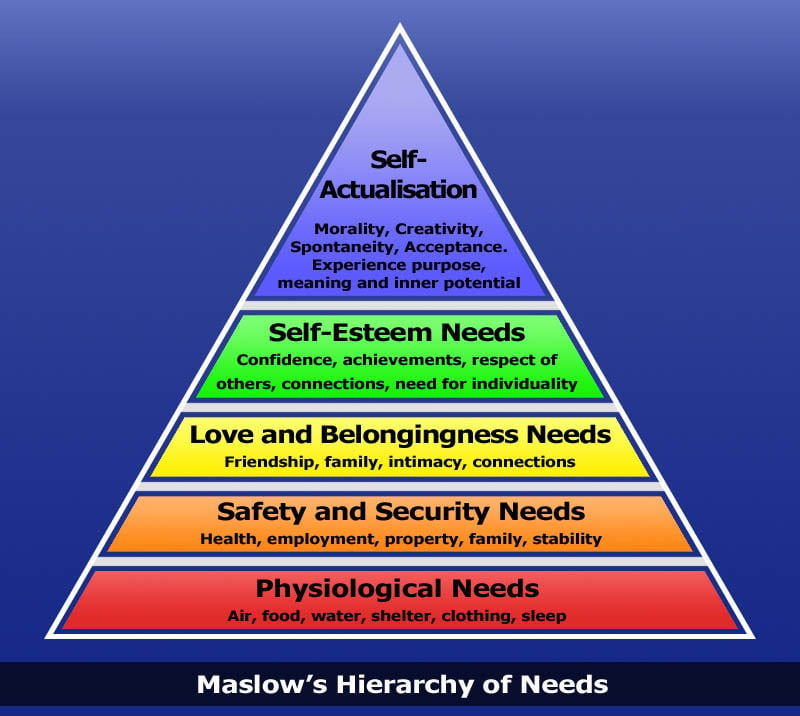
As I was discussing the concerns for our new teachers, my vice principal said something that totally made sense. "Think of Maslow's Hierarchy," she pointed out. "They're worried about basic needs - housing, child care, their paychecks. Those are basic needs, and they can't get to the top of the triangle if these basic needs are not met."
I think I hit my forehead as that made so much sense! It's not something we have total control over, but we can make things better for our new teachers. We can't do anything about their paycheck, or their rent, or child care (although we can try to help them make connections), but we can provide them with more support at our school.
So first, we will give our new teachers additional time by hiring substitutes so they can meet with their Instructional Coach, mentor teacher, or the tech team. We will let them decide who they would like to meet with or what they need more support with. They may need the time to review resources, plan their lessons, or visit other classrooms. The important thing is that they will determine what support would be most useful for them, and we will provide it.
Secondly, we will survey our new teachers to see if they would like us to give them a hard copy of important emails or the Staff Bulletin; right now, they're expected to get them electronically. If these are important, then we need to make sure they get a copy especially if they're struggling to find the time to read them. That way, they will be up-do-date on what's happening at the school or what deadlines are coming up.
Third, we have identified four mentor teachers who are committed to working with our new teachers. We appreciate that they are willing to take on this responsibility in addition to their other duties as classroom or resource teachers. They are trained or receiving induction and mentoring training from District staff, and are committed to helping our new teachers. As I read articles about what qualities mentor teachers possess, I know that we have the right mentors in place. We will set aside funds to provide time for our new teachers to meet as a professional learning community with their mentor teachers. New teachers need the opportunity to not only vent, but to learn together and to realize that they can provide great support for each other.
We continue to seek ways to meet the needs of every teacher at our school, but just as we differentiate for our students, our teachers also need targeted support to be successful. Studies show that providing support for new teachers can make a difference in whether they stay in the profession or leave. We believe that all of our teachers can make a positive difference for their students, and we do not want them to leave the profession.
Sunday, September 4, 2016

Saturday, August 27, 2016
Is Spelling Important?
I wrote this blog two years ago, but I think it's still an important issue that we don't discuss enough at the elementary level.
I loved spelling tests when I was in elementary school. I was good at spelling and didn't even have to study to get good grades. So when I began teaching elementary school, I followed the lead of those who had been teaching that grade level for many years as well as what I remembered from my days in elementary school. We followed the spelling list in the Teacher's Manual for reading. The kids wrote the words down on Monday, wrote it several times in their spelling book for homework that night, wrote a sentence with each word the next night, alphabetized the list on Wednesday, and studied for the test on Thursday night. After the test on Friday, parents waited anxiously for the tests to be returned, and we had happy kids or sad kids, depending on how they did. Sometimes, parents would say, "We studied all night long, and he knew how to spell the word last night. I don't understand why he missed it."
I began to question the value of spelling tests. I was concerned that students were scoring 100% on Friday, yet they were misspelling those same words when they wrote in their journal or responded to a question the following week. When a parent shared that he'd promised to take his son to Toys 'R Us if he scored 100% on his test, I realized that I needed to rethink whether spelling tests were that important.
So I changed what I was doing. On Monday, the students would take a pre-test, and if a student scored 90%-100%, he/she was exempt from taking the test on Friday. They still did the homework, but these students didn't have to write the word several times in their spelling book. At least I was differentiating, I thought, but really, those spelling tests still bothered me. I also noticed that some students felt defeated; they were working so hard but still not getting the kind of scores they wanted. "Is spelling so important?" I asked myself. It would have been so easy to abandon spelling altogether and take the heat when parents questioned why. In the back of my mind, however, I knew that to be an effective reader and writer, a person needs to be aware of spelling. Knowing patterns and rules does help to decode words and to make connections between letters and sounds which then lead to fluency in reading and writing.
Then I bought a book on teaching spelling, and my biggest "aha" was that spelling is developmental. (I wish I still had that book because it changed my thinking about spelling.) The book contained lists for each grade level, and teachers could determine a child's developmental stage by how they spelled the words. I found it so interesting that how a child spelled a word could determine their developmental stage and influence what and how I taught those children. Recently, I found the "Monster Test" that I remember giving to my students a few years ago. It was a simple way to give students a short test and determine their approximate developmental level for spelling. As I recall, it was really quite accurate and helped me to understand what level students were at and how I could help them get to the next level.
After that, the way I taught spelling changed in my classroom. We used manipulatives, looked at patterns, and played with words. One of my favorite memories is when we were thinking of words with "_ar" as the final syllable. (I was teaching first grade at that time.) I would give a clue, and students had to spell the word with their magnetic letters or write it on their whiteboard. For example, I said, "This is something you can ride in," and students excitedly spelled out "car." After spelling "far" and "star" and "war," I asked students if they had a riddle for a word that ended with _ar. I called on Lauren, and she whispered a word in my ear. "Okay," I said, all the while wondering what her riddle would be. "This is a place where daddies go after a hard day at work," she proudly shared. The students had no problem spelling out "bar!"and here I was, thinking of "bar of soap" or "gold bar."
It was those kinds of activities that made a difference for my students. They began to look forward to the short spelling lessons and for homework, students made lists of words with the pattern we were learning. Students were delighted when they contributed a word to the list that other students might not have thought of! Students corrected spelling words in a paragraph or did other fun activities based on the pattern we were studying that week. We also had a word wall, and students had their own personal Quick-Word Handbook. They didn't have to worry about spelling for their first writing draft but they knew that self-correcting their spelling was part of the writing process, and they had tools they could rely on if they needed help.
Oh, one more thing . . . we did take spelling tests, but now, they weren't taken every Friday. Sometime during the week when I thought the students had internalized that spelling pattern, I assessed them, and I added in some bonus words for those who wanted a challenge. The students almost always spelled the words correctly, and if they made an error, they were able to self-correct their mistake. Most importantly, though, was that their subsequent writing assignments reflected that they had truly learned the spelling patterns of the words we had studied.
In this age of Spell-Check, is it important for students to learn to spell correctly? Yes, I believe that spelling still has a place in the classroom. Being an effective communicator and a quality producer means that the reader's understanding and enjoyment of a piece of writing is not hindered by poor spelling. How we teach spelling, however, does not have to be mundane or boring.
I loved spelling tests when I was in elementary school. I was good at spelling and didn't even have to study to get good grades. So when I began teaching elementary school, I followed the lead of those who had been teaching that grade level for many years as well as what I remembered from my days in elementary school. We followed the spelling list in the Teacher's Manual for reading. The kids wrote the words down on Monday, wrote it several times in their spelling book for homework that night, wrote a sentence with each word the next night, alphabetized the list on Wednesday, and studied for the test on Thursday night. After the test on Friday, parents waited anxiously for the tests to be returned, and we had happy kids or sad kids, depending on how they did. Sometimes, parents would say, "We studied all night long, and he knew how to spell the word last night. I don't understand why he missed it."
I began to question the value of spelling tests. I was concerned that students were scoring 100% on Friday, yet they were misspelling those same words when they wrote in their journal or responded to a question the following week. When a parent shared that he'd promised to take his son to Toys 'R Us if he scored 100% on his test, I realized that I needed to rethink whether spelling tests were that important.
So I changed what I was doing. On Monday, the students would take a pre-test, and if a student scored 90%-100%, he/she was exempt from taking the test on Friday. They still did the homework, but these students didn't have to write the word several times in their spelling book. At least I was differentiating, I thought, but really, those spelling tests still bothered me. I also noticed that some students felt defeated; they were working so hard but still not getting the kind of scores they wanted. "Is spelling so important?" I asked myself. It would have been so easy to abandon spelling altogether and take the heat when parents questioned why. In the back of my mind, however, I knew that to be an effective reader and writer, a person needs to be aware of spelling. Knowing patterns and rules does help to decode words and to make connections between letters and sounds which then lead to fluency in reading and writing.
Then I bought a book on teaching spelling, and my biggest "aha" was that spelling is developmental. (I wish I still had that book because it changed my thinking about spelling.) The book contained lists for each grade level, and teachers could determine a child's developmental stage by how they spelled the words. I found it so interesting that how a child spelled a word could determine their developmental stage and influence what and how I taught those children. Recently, I found the "Monster Test" that I remember giving to my students a few years ago. It was a simple way to give students a short test and determine their approximate developmental level for spelling. As I recall, it was really quite accurate and helped me to understand what level students were at and how I could help them get to the next level.
After that, the way I taught spelling changed in my classroom. We used manipulatives, looked at patterns, and played with words. One of my favorite memories is when we were thinking of words with "_ar" as the final syllable. (I was teaching first grade at that time.) I would give a clue, and students had to spell the word with their magnetic letters or write it on their whiteboard. For example, I said, "This is something you can ride in," and students excitedly spelled out "car." After spelling "far" and "star" and "war," I asked students if they had a riddle for a word that ended with _ar. I called on Lauren, and she whispered a word in my ear. "Okay," I said, all the while wondering what her riddle would be. "This is a place where daddies go after a hard day at work," she proudly shared. The students had no problem spelling out "bar!"and here I was, thinking of "bar of soap" or "gold bar."
It was those kinds of activities that made a difference for my students. They began to look forward to the short spelling lessons and for homework, students made lists of words with the pattern we were learning. Students were delighted when they contributed a word to the list that other students might not have thought of! Students corrected spelling words in a paragraph or did other fun activities based on the pattern we were studying that week. We also had a word wall, and students had their own personal Quick-Word Handbook. They didn't have to worry about spelling for their first writing draft but they knew that self-correcting their spelling was part of the writing process, and they had tools they could rely on if they needed help.
Oh, one more thing . . . we did take spelling tests, but now, they weren't taken every Friday. Sometime during the week when I thought the students had internalized that spelling pattern, I assessed them, and I added in some bonus words for those who wanted a challenge. The students almost always spelled the words correctly, and if they made an error, they were able to self-correct their mistake. Most importantly, though, was that their subsequent writing assignments reflected that they had truly learned the spelling patterns of the words we had studied.
In this age of Spell-Check, is it important for students to learn to spell correctly? Yes, I believe that spelling still has a place in the classroom. Being an effective communicator and a quality producer means that the reader's understanding and enjoyment of a piece of writing is not hindered by poor spelling. How we teach spelling, however, does not have to be mundane or boring.
Saturday, August 20, 2016
"That's the way we've always done it"
For the past three school years, our recess fields have been limited due to our construction project. At the end of last school year, we began to seek input from students and staff about how we might restructure recess and our playgrounds. We were in the process of exploring Project-Based Learning, and we posed a question to our students about what they would like to see in a playground. Students from kindergarten up to fifth grade were excited to share ideas in their classroom or in the library, and our librarian (@Michelle_Colte) shared the process in a slide show called, "Planning Our Playground."
We also asked our staff for their input during a Wednesday meeting. We gave them the topic "Recess for Learning," asked the groups to brainstorm questions, select the ones they wanted to explore more, and then to share their learnings. Every staff member was engaged in their group, and the resulting slide show is evidence of the rich discussions that took place. Not surprisingly, the ideas were more practical and less "creative" than our students' ideas. What was impressive was that in the short time available, teams were able to explore and research their questions and provide links to resources.
After that session with our staff, a committee of students presented their ideas to administration and counselors. These third graders were passionate and had clearly done their research in an effort to persuade us to consider their ideas. This slide show shares the students' ideas. In the end, they advocated for 4 main changes: a longer recess (they had research to back up their claim that students need more physical activity during the day); to be able to go to other places at recess (different playground areas, going to the library, the drama room, etc.); permission for all grade level students to use the playground equipment (older students felt the rules were too restrictive); and having a landscaped area and do-it-yourself space (rolling hills, gardens, sandboxes, a maze, etc.).Students were also concerned about the fact that teachers seemed to ban activities whenever there was a problem rather than seek student input about how to resolve the problem. "Students were playing rough at soccer so they ban soccer. Students fell down and got hurt during tag so they ban tag. There's nothing for us to do at recess because teachers keep banning stuff." "So what do you propose?" we asked. "Maybe kids can discuss in class about the rules. Or make the kids who are playing rough find something else to do." The point here is that our students do have suggestions; not all of their ideas are acceptable - we made it clear that climbing trees would not be possible due to safety reasons - but we should give them a voice because recess is their break and they have great ideas.
"So what would teachers think of these ideas?" we asked the students. "Oh, they'll like our ideas," one student replied. "They will think it's important for students to get more exercise." "Will they like having longer recess duty?" I asked. One student thought they wouldn't mind, but another disagreed. "I've heard my teacher when she says, 'I have yard duty.' I don't think she would like it," she explained. 'Empathize' is the first step in the Design Thinking Process, we need to be able to empathize with those who have the problem before we can come up with solutions. Our students need to realize that when they give a suggestion, they need to look at it from all viewpoints, not just their own.
After that, our Leadership Team had an on-line discussion where more questions were asked and more suggestions were made. From there, administrators took all of this information into consideration and came up with a revised plan for recess for this school year. Students were given more choice in which field they wanted to play at, we scheduled a slightly longer recess on Wednesday, and we had mixed grade levels sharing the recess fields. Everything went well, right? Wrong!
The students were happy; they loved recess, and they only had 3 rules to remember: Be safe. Be respectful. Be responsible. The teachers' reactions were mixed, however. Some teachers were willing to give it a chance to work itself out, but others were not convinced the new way could work. They wanted to go back to the old way: "That's the way we've always done it," they said, "Why do we have to change?" After a couple of weeks, we convened a committee to discuss and make recommendations.
We are back to having badges for students to go on the playground equipment. The physical education teachers set out activities each day, and teachers are meeting their students and walking them back to class instead of having them walk back by themselves. I think of this as a next step in the Design Process. We went through the process, designed a prototype (recess for learning where students have more voice and choice), and tested it out. When concerns were raised especially about safety, we went back to the design process and made adjustments. We aren't finished yet; we still want to make recess more student-centric and less teacher-directed, but we need the activities and equipment to make that happen. The Parent Teacher Organization has offered to purchase additional activities for our students to use during recess, teachers are looking in their closets to see if they have resources they can share, and we will continue to tweak what we're doing when necessary.
Recess can be a time for learning; we will make it happen.
We also asked our staff for their input during a Wednesday meeting. We gave them the topic "Recess for Learning," asked the groups to brainstorm questions, select the ones they wanted to explore more, and then to share their learnings. Every staff member was engaged in their group, and the resulting slide show is evidence of the rich discussions that took place. Not surprisingly, the ideas were more practical and less "creative" than our students' ideas. What was impressive was that in the short time available, teams were able to explore and research their questions and provide links to resources.
After that session with our staff, a committee of students presented their ideas to administration and counselors. These third graders were passionate and had clearly done their research in an effort to persuade us to consider their ideas. This slide show shares the students' ideas. In the end, they advocated for 4 main changes: a longer recess (they had research to back up their claim that students need more physical activity during the day); to be able to go to other places at recess (different playground areas, going to the library, the drama room, etc.); permission for all grade level students to use the playground equipment (older students felt the rules were too restrictive); and having a landscaped area and do-it-yourself space (rolling hills, gardens, sandboxes, a maze, etc.).Students were also concerned about the fact that teachers seemed to ban activities whenever there was a problem rather than seek student input about how to resolve the problem. "Students were playing rough at soccer so they ban soccer. Students fell down and got hurt during tag so they ban tag. There's nothing for us to do at recess because teachers keep banning stuff." "So what do you propose?" we asked. "Maybe kids can discuss in class about the rules. Or make the kids who are playing rough find something else to do." The point here is that our students do have suggestions; not all of their ideas are acceptable - we made it clear that climbing trees would not be possible due to safety reasons - but we should give them a voice because recess is their break and they have great ideas.
"So what would teachers think of these ideas?" we asked the students. "Oh, they'll like our ideas," one student replied. "They will think it's important for students to get more exercise." "Will they like having longer recess duty?" I asked. One student thought they wouldn't mind, but another disagreed. "I've heard my teacher when she says, 'I have yard duty.' I don't think she would like it," she explained. 'Empathize' is the first step in the Design Thinking Process, we need to be able to empathize with those who have the problem before we can come up with solutions. Our students need to realize that when they give a suggestion, they need to look at it from all viewpoints, not just their own.
After that, our Leadership Team had an on-line discussion where more questions were asked and more suggestions were made. From there, administrators took all of this information into consideration and came up with a revised plan for recess for this school year. Students were given more choice in which field they wanted to play at, we scheduled a slightly longer recess on Wednesday, and we had mixed grade levels sharing the recess fields. Everything went well, right? Wrong!
The students were happy; they loved recess, and they only had 3 rules to remember: Be safe. Be respectful. Be responsible. The teachers' reactions were mixed, however. Some teachers were willing to give it a chance to work itself out, but others were not convinced the new way could work. They wanted to go back to the old way: "That's the way we've always done it," they said, "Why do we have to change?" After a couple of weeks, we convened a committee to discuss and make recommendations.
We are back to having badges for students to go on the playground equipment. The physical education teachers set out activities each day, and teachers are meeting their students and walking them back to class instead of having them walk back by themselves. I think of this as a next step in the Design Process. We went through the process, designed a prototype (recess for learning where students have more voice and choice), and tested it out. When concerns were raised especially about safety, we went back to the design process and made adjustments. We aren't finished yet; we still want to make recess more student-centric and less teacher-directed, but we need the activities and equipment to make that happen. The Parent Teacher Organization has offered to purchase additional activities for our students to use during recess, teachers are looking in their closets to see if they have resources they can share, and we will continue to tweak what we're doing when necessary.
Recess can be a time for learning; we will make it happen.
 |
| Recess on the back field . . . |
 |
| . . . . in the front of the school by O-building . . . |
 |
| . . . and on the court. |
 |
| When the playground refurbishment is completed, we'll have more options for our students. |
Sunday, August 7, 2016
A Positive Start to a New School Year
This is a year of change for us. Our construction project is almost complete, we exceeded our enrollment projection which means additional funds for our school, our new staff members have acclimated well, and we made some changes to our schedule that we think will make a difference for our students.
This year, there are still areas with orange plastic screening to keep us out, but for the most part, most of the construction barriers have been removed. What a difference this has made! The past three years have been like walking through a maze to get from one area of campus to another, and the walkways were dark and narrower than usual. When the bell rang, there wasn't enough room for students, parents, and toddlers in strollers. Now that those barriers have been removed, there is plenty of room on the walkways for everyone. Yeah! Happy staff, happy students, and happy parents!
This school year, we are focusing our efforts on four initiatives. We will continue to address the six priority strategies for our Department, but our main focuses will be on the following:
This year, there are still areas with orange plastic screening to keep us out, but for the most part, most of the construction barriers have been removed. What a difference this has made! The past three years have been like walking through a maze to get from one area of campus to another, and the walkways were dark and narrower than usual. When the bell rang, there wasn't enough room for students, parents, and toddlers in strollers. Now that those barriers have been removed, there is plenty of room on the walkways for everyone. Yeah! Happy staff, happy students, and happy parents!
 |
| It's nice to have covered walkways throughout the campus. Now students can stay dry when they're walking around campus even when it rains. |
- Implement project-based learning (PBL) with communication skills embedded. Literacy skills - reading, writing, speaking and listening - will be addressed throughout PBL, and the use of technology will be encouraged when appropriate. We started exploring PBL last school year, and this year, we will be building on what we learned. This year. teachers set their own goals related to PBL, and we will be placing them into Professional Learning Communities based on what they would like to explore and discover. There will be opportunities to articulate vertically with teachers in different grade levels and to bring back information to the respective grade levels.
- Continue to develop a writing continuum with sample writing pieces and criteria so students can self-assess and set their own goals. Last year, we struggled with the idea of a writing continuum that would be personalized for our school. Rather than abandon the idea, we will be collecting student samples of different kinds of writing and looking at the pieces more closely. We want teachers to critique these writing samples in their classrooms, eventually coming up with criteria for quality writing. We want students to be able to self-assess and to revise their own writing pieces. The writing continuum is a work-in-progress; it is a process that takes time and honest discussions amongst our teachers and our students.
- Students learn and apply math for understanding using “Stepping Stones” and other resources; embed problem-solving skills and strategies into math instruction. Our State has mandated the use of "Stepping Stones" as a resource to teach math. Because we did not have funds at the time, we put off purchasing licenses for this program until this school year. I just read an article, "A History Lesson: When Math Was Taboo," and I found it really interesting and applicable. Too often, we teach algorithms, and students don't understand what the algorithm means or why it works. We need to teach math for understanding.
- Implement Positive Behavior Intervention Support school-wide to ensure success for all students. Students need to feel safe in their learning environment. We have a strong PBIS system in place, but we continue to make it better. We know that building positive relationships with our students is essential, and having students reflect on their actions has been effective in reducing negative behaviors. We made PBIS a priority two years ago, and we believe that emphasis has resulted in pride and respect amongst our school community.
We anxiously await the completion of our covered play court; we will have options for activities before school, during the day, and after school. We have more recess areas and a different schedule that will give students choices for unstructured as well as structured opportunities. We plan to offer after-school or weekend enrichment activities, and when the library opens, our Makerspace will undoubtedly be a popular choice for students to express their innovation and creativity.
As the year unfolds, I will share insights, lessons learned, reflections, and challenges. After one week, I can say that the year has gotten off to a wonderful start!
Wednesday, July 27, 2016
Using the Olympics to Excite and Engage!
Four years ago this month, I decided to write a blog about my experiences and learnings as the principal of our school. It has been a challenge at times to keep going with this blog, but I'm glad I'm continuing. Today, I decided to go back and read some of the first blogs I wrote. Ah . . . I remember the stress I felt when I first pressed "publish." Today, I realize that the blog is primarily a way for me to personally reflect on education issues, challenges and successes at our school, and my personal journey as a school leader. I don't regret my decision to start this blog.
One of my reasons for re-reading my first blogs is because I knew I had written about the London Olympics. Because the Rio Games are starting soon, I wanted to get some ideas about what I'd written four years ago. I think there are so many learning opportunities that can engage our students and generate interest in the Olympics! I decided to update my original blog to make it more relevant to what we know about engaging and empowering students in their own learning.
Every four years, we watch and cheer as athletes from countries all over the world compete in the Summer Olympics. I love the Olympics! Despite the conflicts between countries that may be occurring at that time, it seems that the Olympics embody what the world could and should be. We cheer for those representing our country, but we also cheer for those who may not win a medal but have overcome adversities to be on the world stage.
I also love the Olympics for the opportunities it provides for students to learn about so many different aspects of the Games. Encourage your students to read articles or books or watch the Olympics on TV to get some background knowledge, then have them brainstorm questions they may have.
Today, we started our new school year, and our vice principal and I decided to use the Olympics as our theme. The first day back can be grueling - lots of information to absorb! Forcing teachers to listen while we drone on and on is directly opposite of what we want to see in our classrooms.
Teachers got into teams for countries like Togo, Nicaragua, Dominica, Micronesia, and Solomon Islands. What is the commonality of all those teams? (If you don't know, research and find out!) Then teachers did some research and each team shared an interesting fact about their country. I think it would be a great classroom activity for students! Throughout the day, teams collected points. It was great to see the teamwork and the camaraderie amongst the staff! It was fun!
Another activity was having teachers brainstorm higher level thinking questions about the Olympics; each team posted questions in our Google+ community. There were some great questions that could lead to exploring and discovering new information and then sharing with others. These are examples of the questions our teachers came up with:
Perhaps we can have students ask the questions and discover the answers to their questions. Encourage them to follow the Olympics and learn about the different events and get to know athletes including those from different countries. Every time I watch the Olympics, I learn something new about a country or a sport or an athlete. Our students will, too.
School begins on Monday. An Olympics unit is a great way to incorporate rigor, relevance, and relationships into the classroom!

One of my reasons for re-reading my first blogs is because I knew I had written about the London Olympics. Because the Rio Games are starting soon, I wanted to get some ideas about what I'd written four years ago. I think there are so many learning opportunities that can engage our students and generate interest in the Olympics! I decided to update my original blog to make it more relevant to what we know about engaging and empowering students in their own learning.
Every four years, we watch and cheer as athletes from countries all over the world compete in the Summer Olympics. I love the Olympics! Despite the conflicts between countries that may be occurring at that time, it seems that the Olympics embody what the world could and should be. We cheer for those representing our country, but we also cheer for those who may not win a medal but have overcome adversities to be on the world stage.
I also love the Olympics for the opportunities it provides for students to learn about so many different aspects of the Games. Encourage your students to read articles or books or watch the Olympics on TV to get some background knowledge, then have them brainstorm questions they may have.
Today, we started our new school year, and our vice principal and I decided to use the Olympics as our theme. The first day back can be grueling - lots of information to absorb! Forcing teachers to listen while we drone on and on is directly opposite of what we want to see in our classrooms.
Teachers got into teams for countries like Togo, Nicaragua, Dominica, Micronesia, and Solomon Islands. What is the commonality of all those teams? (If you don't know, research and find out!) Then teachers did some research and each team shared an interesting fact about their country. I think it would be a great classroom activity for students! Throughout the day, teams collected points. It was great to see the teamwork and the camaraderie amongst the staff! It was fun!
Another activity was having teachers brainstorm higher level thinking questions about the Olympics; each team posted questions in our Google+ community. There were some great questions that could lead to exploring and discovering new information and then sharing with others. These are examples of the questions our teachers came up with:
- Why and how did Rio get chosen for the 2016 Olympics?
- What sport/event do you think should be added to the Olympics? Why?
- How do the Olympics affect the local economy?
- What is the optimal training and diet for an athlete to perform at the highest level?
- How would you engineer your own model Olympic stadium? What materials would you use? Why?
- Based on the history of Olympic games, what kinds of Olympic events would you expect in 100 years?
- How do athletes mentally prepare for all the stress and pressure that comes with representing their country?
- If we developed our own Inouye Elementary Olympics, what games would you include? Why?
- Why do people who don't normally watch sports watch the Olympics?
Perhaps we can have students ask the questions and discover the answers to their questions. Encourage them to follow the Olympics and learn about the different events and get to know athletes including those from different countries. Every time I watch the Olympics, I learn something new about a country or a sport or an athlete. Our students will, too.
School begins on Monday. An Olympics unit is a great way to incorporate rigor, relevance, and relationships into the classroom!
Sunday, July 10, 2016
Support for New Teachers
This will be my 14th year as principal of our school, and the first that we have such a turnover of teachers. In my last blog, I shared my feelings about losing staff and hiring new teachers. I ended the blog on a positive note, and I feel confident that we will benefit from the individual strengths and life experiences of our new staff.
Since then, I read a timely and relevant blog, "8 Characteristics of a Great Teacher," and it was such validation of what I believe as an administrator. I reflected on our interviews with numerous applicants, and I know why we selected the teachers we did. When we ask our interview questions, we are listening to the candidates' core beliefs and their life experiences about why they went into teaching and what they can offer to our students and school community. We can tell when they are being honest and saying what they believe. Throughout the interview, woven into the different questions we ask, we get a glimpse into that teacher's philosophy and beliefs about education and about children. We were picky; even though we had a number of openings, we preferred to ask for another list if we didn't feel that anyone would be the kind of teacher who would thrive in our school.
Many of the teachers we hired are new to the state or new to the profession, and they bring a wealth of experiences to our school. I am excited about what they shared when we asked about any innovative projects they had been involved with. They are committed to building strong relationships with their students, especially those who are the most challenging. As the interview ended, some teachers found a way to add that they are not textbook or worksheet-driven and prefer to engage students through inquiry-based hands-on activities that encourage collaboration and communication with others. I was pleased that these interviewees were confident enough to let me know up-front about their beliefs and practices. As part of our interview process, we want any teacher applicant to know that as a school, we believe that there is a general guideline of what students need to learn and do, but teachers are encouraged to use their own strengths as well as the strengths and interests of their students to provide a rich, engaging, and empowering classroom curriculum.
What these interviews indicated to me was contrary to what we've been hearing about schools today. The teachers we hired did not talk about high test scores or following a set program. They shared about knowing their kids and building a community within their classroom so their students would feel safe and will want to come to school even if they are experiencing challenges such as transitions or deployments. They are excited to try new things that we have implemented at our school like creating a class web page to communicate with families or using technology to share student learning. And they embraced our school vision, "Empowering learners to explore, discover, create, and share" and related our vision to themselves as teachers and learners.
Now that we have found the teachers we want for our school, it is our responsibility as administrators to provide them with the support and guidance they need to be successful in their new positions. Our grade level teams, instructional coaches, technology team, and mentor teachers are essential in providing that support. After all, teaching is a challenging profession but with the right support, our new teachers will continue to grow personally and professionally.
Since then, I read a timely and relevant blog, "8 Characteristics of a Great Teacher," and it was such validation of what I believe as an administrator. I reflected on our interviews with numerous applicants, and I know why we selected the teachers we did. When we ask our interview questions, we are listening to the candidates' core beliefs and their life experiences about why they went into teaching and what they can offer to our students and school community. We can tell when they are being honest and saying what they believe. Throughout the interview, woven into the different questions we ask, we get a glimpse into that teacher's philosophy and beliefs about education and about children. We were picky; even though we had a number of openings, we preferred to ask for another list if we didn't feel that anyone would be the kind of teacher who would thrive in our school.
Many of the teachers we hired are new to the state or new to the profession, and they bring a wealth of experiences to our school. I am excited about what they shared when we asked about any innovative projects they had been involved with. They are committed to building strong relationships with their students, especially those who are the most challenging. As the interview ended, some teachers found a way to add that they are not textbook or worksheet-driven and prefer to engage students through inquiry-based hands-on activities that encourage collaboration and communication with others. I was pleased that these interviewees were confident enough to let me know up-front about their beliefs and practices. As part of our interview process, we want any teacher applicant to know that as a school, we believe that there is a general guideline of what students need to learn and do, but teachers are encouraged to use their own strengths as well as the strengths and interests of their students to provide a rich, engaging, and empowering classroom curriculum.
What these interviews indicated to me was contrary to what we've been hearing about schools today. The teachers we hired did not talk about high test scores or following a set program. They shared about knowing their kids and building a community within their classroom so their students would feel safe and will want to come to school even if they are experiencing challenges such as transitions or deployments. They are excited to try new things that we have implemented at our school like creating a class web page to communicate with families or using technology to share student learning. And they embraced our school vision, "Empowering learners to explore, discover, create, and share" and related our vision to themselves as teachers and learners.
Now that we have found the teachers we want for our school, it is our responsibility as administrators to provide them with the support and guidance they need to be successful in their new positions. Our grade level teams, instructional coaches, technology team, and mentor teachers are essential in providing that support. After all, teaching is a challenging profession but with the right support, our new teachers will continue to grow personally and professionally.
Saturday, June 25, 2016
I was feeling sorry for myself . . .
. . . here it was nearing the end of June, and we still hadn't completed our hiring for the next school year. For every teacher applicant who agreed to a meeting with us, there were 10 who had already been hired at another school or declined to interview (too far, no transportation, etc.).
This year more than any other in my tenure at our school, we had a lot of staff leave. All were for good reasons - retirement, new assignment for their military spouse, beginning the journey to become an administrator, staying home with their new baby, or moving to a new school either here in Hawaii or in a different state. No one left because they wanted to quit teaching.
As I continued to send emails or make phone calls to teacher candidates inviting them to interview with us, I received phone calls from principals in other states about two of our teachers. While I knew these teachers were exploring possibilities of venturing away from Hawaii and seeking new opportunities elsewhere, those phone calls were not what I needed at the time. As I spoke with the principals, though, I realized that they were just like me. They were looking for the "right" teacher for their school, and they were relying on my feedback to validate what they heard during their interview. Those of us in administration want the same thing: We want teachers who are committed to teaching, who treat others with respect, who are not just teachers but learners as well, and whose primary reason for teaching is to guide and support students to maximize their potential and to love learning. We know that teaching requires a commitment to doing all we can to prepare our students for their future. I ended my conversation with these principals with, "I know they'll be in good hands if they go to your school. Make sure they share what they've learned here and help them continue to grow as educators." They promised to do so.
Because our school has a high rate of transiency due to our military-impacted enrollment, we tell our students that when they leave us, they are "ambassadors" for our school and for schools in Hawaii. We emphasize the General Learner Outcomes because if we are able to demonstrate these GLOs in our daily lives, we will be successful wherever we are. The same goes for our teachers who leave our school or leave Hawaii and go on to teach elsewhere. They will learn new skills and strategies in their new school, and hopefully, they will share what they've learned during their tenure at our school. They are ambassadors as well!
And special thanks to our Student Services Coordinator who shared with me what she said to one of our teachers who's leaving. "I'm sad for us," she said, "but I'm excited for you!" She speaks from experience; she came to Hawaii years ago as a brand new teacher from the mainland, and now, this is her home. Her words helped me realize that I needed to snap out of my woe-is-me attitude. Thanks, Teri :-)
Last school year, we had no new teachers. This year, we'll be hiring a mix of first year teachers and those who've relocated to Hawaii but have taught elsewhere. Every individual brings something different to the table; that's what makes every school unique. I am confident that we will have another great year at our school!
This year more than any other in my tenure at our school, we had a lot of staff leave. All were for good reasons - retirement, new assignment for their military spouse, beginning the journey to become an administrator, staying home with their new baby, or moving to a new school either here in Hawaii or in a different state. No one left because they wanted to quit teaching.
As I continued to send emails or make phone calls to teacher candidates inviting them to interview with us, I received phone calls from principals in other states about two of our teachers. While I knew these teachers were exploring possibilities of venturing away from Hawaii and seeking new opportunities elsewhere, those phone calls were not what I needed at the time. As I spoke with the principals, though, I realized that they were just like me. They were looking for the "right" teacher for their school, and they were relying on my feedback to validate what they heard during their interview. Those of us in administration want the same thing: We want teachers who are committed to teaching, who treat others with respect, who are not just teachers but learners as well, and whose primary reason for teaching is to guide and support students to maximize their potential and to love learning. We know that teaching requires a commitment to doing all we can to prepare our students for their future. I ended my conversation with these principals with, "I know they'll be in good hands if they go to your school. Make sure they share what they've learned here and help them continue to grow as educators." They promised to do so.
Because our school has a high rate of transiency due to our military-impacted enrollment, we tell our students that when they leave us, they are "ambassadors" for our school and for schools in Hawaii. We emphasize the General Learner Outcomes because if we are able to demonstrate these GLOs in our daily lives, we will be successful wherever we are. The same goes for our teachers who leave our school or leave Hawaii and go on to teach elsewhere. They will learn new skills and strategies in their new school, and hopefully, they will share what they've learned during their tenure at our school. They are ambassadors as well!
And special thanks to our Student Services Coordinator who shared with me what she said to one of our teachers who's leaving. "I'm sad for us," she said, "but I'm excited for you!" She speaks from experience; she came to Hawaii years ago as a brand new teacher from the mainland, and now, this is her home. Her words helped me realize that I needed to snap out of my woe-is-me attitude. Thanks, Teri :-)
Last school year, we had no new teachers. This year, we'll be hiring a mix of first year teachers and those who've relocated to Hawaii but have taught elsewhere. Every individual brings something different to the table; that's what makes every school unique. I am confident that we will have another great year at our school!
Subscribe to:
Posts (Atom)