Wednesday, September 25, 2019

Please Consider Being an Organ Donor

This past weekend, we were invited to attend a Nevada Donor Network’s Donor Remembrance Event to thank the families and friends of recent organ donors. Randy and I decided to make the trip to Las Vegas and to attend the event with our son, Justin, and our grandsons, Jace and Jayden. We wanted to honor the memory of our second son, Jarand and his unselfishness in becoming an organ donor. Nevada Donor Network was able to harvest his corneas to give sight to two people and thus improved their quality of life.

The convention room was filled with people, young and old. It was somber but also uplifting to know that somehow, all of us were connected by our loved one’s decision to become an organ donor. As I read through the book and viewed the slide show, I was overwhelmed by the stories of how each person made a difference, most of them to strangers, by their simple act of checking the box on their driver’s license. In fact, that’s why Nevada Donor Network contacted us - because Jarand checked that box.

The keynote presenter was Dr. Kenneth Moritsugu, M.D., M.P.H., F.A.C.P.M., and Rear Admiral, USPHS (Retired). That convention room was silent as he shared grim data about organ donation and transplantation: 113,000+ names in the United States for those needing an organ donation; 18 people on that list passing away each hour, never having had their opportunity to receive a transplant. He asked us to visualize the new Las Vegas Raiders Stadium that is presently being built and which will hold 65,000 fans. I pictured that in my mind and could only shake my head. Then Dr. Kenneth Moritsugu shared that his wife, Donna Moritsugu had passed away in an automobile accident 27 years ago, and different organs were transplanted into people, thereby giving them a new opportunity at life. Four years after that, his 21-year-old daughter, Vikki Lynn Moritsugu was hit by an automobile and her organs were also donated so others could have an improved quality of life. The Moritsugu family took two tragic events and turned them into opportunities to make a positive difference for others.

One day, medicine and technology will merge and make it possible for organ donation and transplantation to be unnecessary. Until then, society will rely on ordinary people like Jarand to be organ donors.

I was filled with an array of emotions on Saturday. I was proud of our son for being an organ donor; it validates what a selfless person he was. I was also filled with an overwhelming sense of loss, not just for Jarand, but for all the donors and their families. I also felt gratitude for those who benefited and now have an opportunity to live a better life. At the event, there were donor recipients who shared their stories and showed their medals about the Transplant Games, an Olympics-style event for those who received transplants and are now living active lives. They were inspirational.

If you are not presently an organ donor, I hope you will consider becoming one. It’s so easy to just check the box on your driver’s license. If you would like more information about organ donation in Hawaii, check out the link for Legacy of Life.

I want to thank Nevada Donor Network for inviting us to share in this very special event.

 We received a book that shared about the donors. This is Jarand’s page.
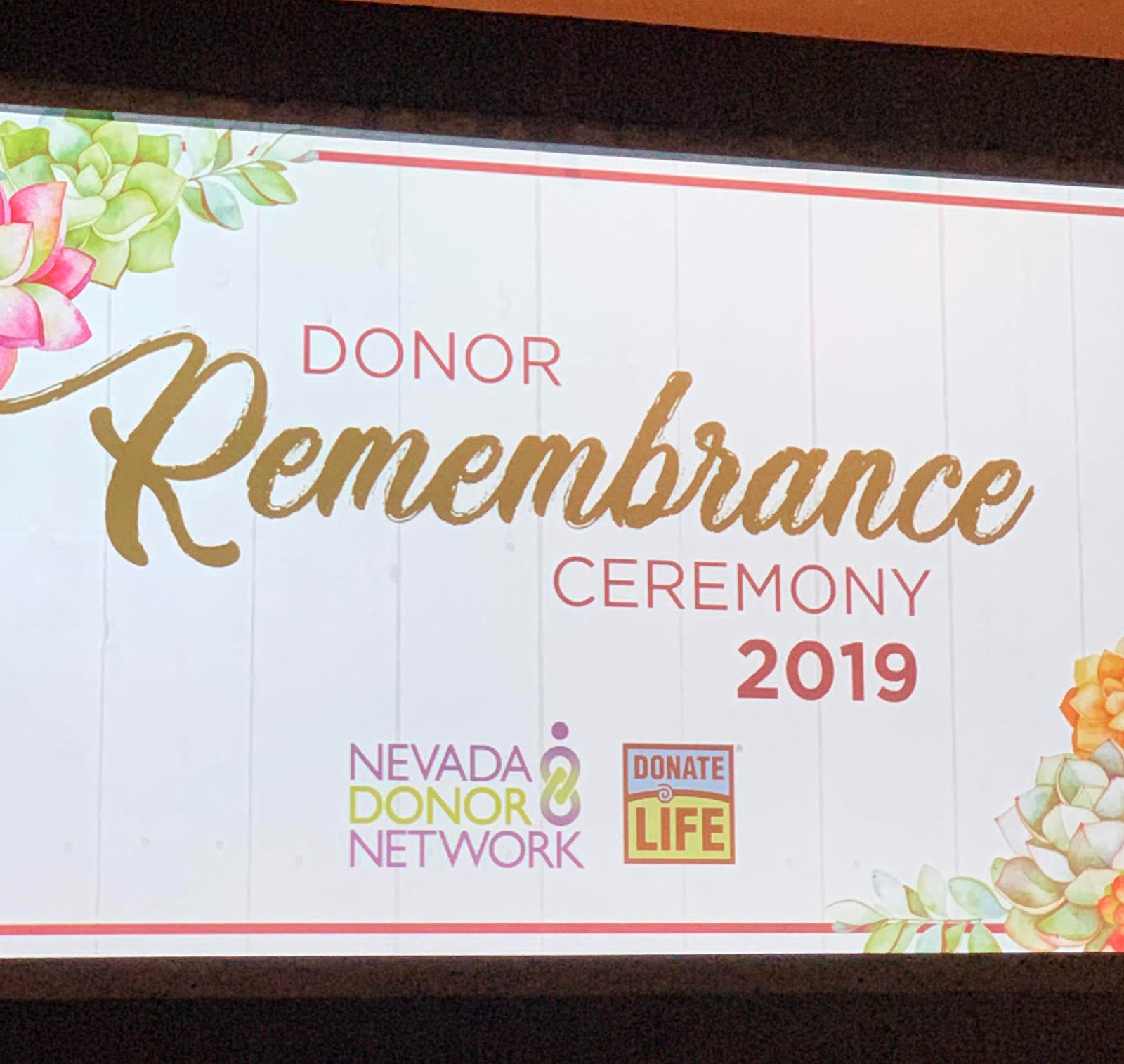
There was a slide show with photos of the donors as well as displays about some of the donors.

Each donor’s family received a small jar of colored sand which we added to the larger container. Now we are all connected to the other donors and their families and friends.

The Red Rock Casino Convention Center Ballroom was filled with people. 

Each donor received this very special medal. Jarand, we are proud of you. 


Tuesday, September 17, 2019

“Ho`oha`aheo” Public School Proud

I was honored to be asked to write an article for the September 2019 issue of Ho`oha`aheo, the newsletter for the Hawaii Department of Education. I thought I’d share the article here.

I wasn’t quite 5 years old when I stepped foot into my kindergarten classroom at brand-new Helemano Elementary School in Whitmore Village, north of Wahiawa, Oahu. I was in awe - new friends, new books, new activities, and a teacher - Miss Okihara, whom I adored. It was sometime during my first year in school that I decided that I wanted to be a teacher when I grew up. I never lost sight of my goal, and after graduating from Leilehua High School, I obtained my teaching degree from the University of Hawaii, Manoa.

There were no jobs at the time for those of us who majored in elementary education, so I was fortunate to be hired by the Head Start program. I was thrilled to have my own classroom in a former Japanese language school that I attended when I was in elementary school. It was old and had been vacant for a long time, but we brightened it and turned it into a classroom where our students would gain the skills they needed to be successful when they entered elementary school.

After 15 years with Head Start, I was finally hired at the Department of Education, teaching first at Wheeler Elementary School and then opening a new high tech school, Mililani Mauka Elementary. I loved being a teacher! Every student was different; every one was special, and building relationships and helping them to grow socially, academically, and emotionally was so rewarding. I felt so lucky to be doing something I really loved.

At the suggestion of my principal, I decided to pursue educational administration, and for the last 15 years of my career, I was the principal of Daniel K. Inouye Elementary School (aka Hale Kula Elementary). It was a truly wonderful experience working in a school community where 98% of our students were from military families. These families faced unique challenges such as transitions and deployments, and our school became their `ohana. I believe that our military students and their families are the perfect ambassadors for our Hawai`i schools, sharing the aloha spirit wherever their paths may lead them in the future.

When I retired in July 2018, I decided to write a book, and in July 2019, my book was published. Leading with Aloha: From the Pineapple Fields to the Principal’s Office  shares how my humble roots growing up in a pineapple plantation village strengthened the core values and beliefs that helped me to lead our school with aloha - love, compassion, empathy, and respect. The process of writing and publishing a book was more difficult than I thought, but the opportunity to share my story motivated me to persevere.

I encourage all educators to reflect and to write about their own personal and professional experiences - the successes and the challenges - because we can learn from each other. I cannot think of a more rewarding profession than being an educator; we should be proud to share our stories!

Monday, September 9, 2019

“Most Likely to Succeed in Hawaii”

I’ve been retired for a little over a year now, but that doesn’t mean that I am no longer interested in education issues. On the contrary, I probably have more time now to delve deeper and to decide how I want to stay involved.

Last week, I agreed to be a mentor for Hawaii Innovative Leaders Network 2.0. I was a member of the first HILN cohort, and it was the best professional development I received as a principal. When I first began HILN 1.0, I was a bit hesitant because I had never interacted with any of the other participants prior to being a part of this PD. By the end, though, I considered all of those school leaders as not just colleagues, but friends. Today, I reflected on my experiences (see my blog), and I know why HILN was so valuable to me as a school leader. It was the culture of trust, the realization that we were at different places in our journey, but that we all were striving to engage and empower our students and our staff to make a difference in this world through project-based learning. It is evident that HILN 2.0 is a dynamic group of school leaders. Many are young and just starting their journey as administrators, but already, they are confident in who they are and what they hope and dream for their schools. Others are more experienced, but they are excited and open to new ideas so that their schools will benefit.

Our schools and our leaders in Hawaii are going through some pretty significant changes that are positively impacting our students. I see many more schools using social media to share not only what is going on but also to engage in conversations with others about “What School Could Be.” I am thrilled! This was something I hoped for, where schools in Hawaii are much more open about sharing successes as well as challenges. Educators are supporting each other in their writing; they are planning un-conferences; they are hosting ed chats, and recently, a “Most Likely to Succeed in Hawaii” podcast launched. I’ll be honest; I don’t listen very often to podcasts, but I really enjoyed the first two episodes and can’t wait to hear more from outstanding school leaders! I wished that these podcasts had been available when I was a principal so I could have connected and learned from others.

This is a great time to be an educator! Let’s show the rest of the country “What School Could Be” in Hawaii!


Thursday, August 22, 2019

Mahalo for a Wonderful Morning!

Earlier this week, I was invited to a Kau Kea`au Pahoa Complex Principals Meeting to share about my book Leading with Aloha: From the Pineapple Fields to the Principal’s Office as well as my experiences as a principal. I wasn’t sure what to expect. During a phone conference with Complex Area Staff, I shared that I preferred that it be a conversation rather than a presentation. My husband Randy and I got up early for the plane ride and arrived at the meeting at about 8:30 a.m. We were greeted warmly with music, hugs, lei, and food. I immediately felt at-ease.

I shared a bit about why I wrote my book, and principals had an opportunity to ask questions or to participate in discussions about issues like Early Learning and Project-Based Learning. I have strong opinions about these issues, and I encouraged the principals to share their thoughts with others. After I had completed my book-signing and Randy and I were ready to leave, the KKP Complex Area Team stood and together, they sang an Oli Mahalo to us. It was so touching; I cannot adequately put into words how that made us feel. The KKP Complex Area went through a challenging time in recent years due to the lava flow which threatened homes and schools and forced students and staff to relocate. From our comfortable homes on Oahu, we read or heard about how the Complex and the Department came up with a plan that ensured the safety of the 1,700 students and 300 employees who were impacted by the lava flow as well as other health and safety issues. Everything is now back-to-normal, and students returned to their home schools. Perhaps, though, that coming together as a Complex Area will have a long-lasting impact that will benefit all of their students.

Thank you, KKP Complex Area principals and staff, for a wonderful day and for sharing your aloha with Randy and me! We are humbled.

Singing the Oli Mahalo to Randy and me

 The KKP Complex Area principals and staff

Such a cute bag of Big Island goodies


Friday, August 9, 2019

The Life of a Military Spouse


I saw this on Facebook this morning; it was a post on our school’s PTO page. I smiled at the reference to the song, "Call Me Maybe" by Carly Rae Jepsen, but then it hit me. This is real for our military families. Until I became the principal of a military-impacted school, I had no idea how much we take for granted in our stable lives in our stable communities. Think about it; a family moves in to our geographical area; they have children who need to be registered for school. What if they don't know anyone yet? Who do they put down as emergency contacts? 

Military families know that changing duty stations is part of their lifestyle, and although most have positive attitudes about moving every few years, it isn't easy for anyone. Just this week, two of our former DKIES teachers shared how challenging it is for them to start over in a new school in a new district in a new state and in a new grade level. They are considered probationary teachers again even though one of them is in her 16th year of teaching. They shared that they missed the aloha spirit they felt at our school as well as the grade level colleagues they taught with. My heart ached; I wished I could give them a big hug. So I did the next best thing. I messaged them and told them I knew they would be fine, that they would persevere, and that they would contribute positively to their new school. These teachers as well as many other military spouses who taught at our school were assets to our school community. I loved hiring these military spouse teachers! They knew what it was like to be the “new kid on the block” and they welcomed transitioning students with empathy and helped them to feel a part of their classroom `ohana. More than that, though, we had opportunities to share and learn from each other. I embraced this mutually beneficial relationship in my years as a principal.

One positive outcome for these military spouse/teachers is that they are able to work under different principals and with different colleagues. They learn to adapt and to make the best of a challenging situation, and in the process, they create their own set of core values about teaching and learning that become part of who they are as educators. I have suggested to several of them that when their husband retires from military service, they need to settle down and pursue their dreams. Hopefully, some of them will take my advice and go into administration. And hopefully, the experiences they gained while at our school will help them to lead with aloha.

Just as I believe that our students are ambassadors for our Hawaii schools, I also believe these teachers are ambassadors as well. That teacher with 16 years of experience? As a special education teacher, she had the opportunity to be trained in the use of a multi-sensory reading program while she was at our school. She shared that even though her first day was rough, she knows that she brings something to the school because her new school has adopted that program. The other teachers were so excited to have someone on staff with experience! When the other teachers looked at her gratefully and asked where she was trained, she proudly said, "Hawaii!" Yes! She is already making a positive impact!

#leadingwithaloha

Wednesday, August 7, 2019

Will Teachers Become Obsolete?

I happen to think that teaching is society’s most important profession. The future of our kids is in the hands of educators who care and who are continuously learning and trying new strategies to engage and empower their students to be their best. The caring relationships that teachers create with their students can have a long-lasting positive impact. Teaching is a hard job and requires stamina and the willingness to keep pushing forward even when things get challenging. It is not a job for the faint-hearted.

I also believe that our society has diminished the important role of teachers. We hear our leaders claim that education is a priority, but the reality is that it isn’t. Funding is inadequate to update facilities, and schools must sometimes choose between classroom teachers and a librarian or an art or music or physical education teacher because there is not enough to go around. Many teachers are forced to get second jobs in order to pay their bills, young people are discouraged from becoming educators, and the public is quick to criticize schools for new ways of teaching and learning that they don’t understand or that conflict with how they learned the same concept years ago when they were in school. It is no wonder that we have a teacher shortage; and it can only get worse.

As schools deal with a shortage of teachers and the availability of technology, what will they do? One option is to purchase a personalized learning program where students work at their level until they achieve mastery on the specific standard. Teachers review the data and then plan small group instruction for groups of students with similar areas of need. It sounds like a good plan, but does it work for every child? According to this report, the results are mixed. Some students would probably thrive in a system like that because they are capable and competitive, but I think lots of kids would have difficulty in this kind of system. They would find it boring and would not be motivated to do their best. I also am concerned about whether learning for mastery in a personalized learning program translates to application of skills in real-life situations. Yet, I can see schools spending their funds on these types of programs as a solution to shortage of teachers.

I am as guilty as the next person of using the self-checkout line at Wal-Mart or going to the ATM machine to deposit or withdraw money instead of going to a sales clerk or a teller. We hear about robots replacing maids at hotels and robots efficiently preparing items for packaging and mailing at Amazon. Will this happen in our schools as well? Will teachers become obsolete? I certainly hope not.

This morning, I read a blog by Principal Derek Minakami, and I knew the picture of a rock wall was the perfect analogy for me. His blog so poignantly shares why and how teachers fill the “little spaces of aloha” to make a big difference for our students. The Tripps of this world will always be there, and they will need the aloha from teachers to overcome the obstacles in their lives to become productive citizens.

And that is why teachers and students need to tell their stories because teachers truly make a difference for their students. Teachers need to share stories with their students about why they chose to become teachers. Students need to hear from teachers about how much they love their job and how the little successes are sometimes the most heartwarming. And we need students to share their stories as well about teachers who believed in them and helped them to overcome difficulties they were facing. Those “empty spaces of aloha” that Principal Minakami shares in his blog? Those are the memories our students will have when they have move on from our classroom. It is what sustains them during challenges in their lives: I know you can do it. I care about you. I love how you never give up. Talk to me. I believe in you. Tell me what matters to you.

As an educator for 45 years, I cannot think of a more honorable or fulfilling profession than teaching. Educators and students, let's share that message with the public!


#leading with aloha

Saturday, July 27, 2019

A Serendipitous Meeting


This is Herbert Yanamura. Earlier this week, my sisters and I brought my Mom to visit Aunty Grace, my Dad’s sister, who is in a skilled nursing facility. Her daughter and son-in-law were visiting from California, her son was there, and we all had a nice visit. Herbert is also at this facility; he is a World War II hero, having served in the 442nd Battalion and as a linguist with the Military Intelligence Service. Herbert came out of his room to visit with us, and small world, he knew our Dad back in Honaunau on the Big Island. This was when my Grandpa decided to move his family to Kona to try his hand at coffee farming. Unfortunately, that didn’t work out, so the family moved back to Oahu. Herbert shared that he was a year older than my Dad, Keiji, so that would make Herbert 95 years old today. He told us that he and my Dad played together often and that my Dad had to walk very far just to get to school. He also said that they enjoyed playing baseball and that my Grandpa was such a baseball fan; he would watch games and cheer loudly, raising his hands in the air.  Herbert demonstrated, and we laughed, recalling that Grandpa enjoyed watching our brother Roy playing baseball.

We asked Herbert to share about his time in World War II. He was thoughtful and spoke quietly but with clarity to details. It is evident that he understood the importance of sharing his story with us as one of two hundred soldiers, recruited from the 442nd Regimental Combat Team, to serve as linguists with the Military Intelligence Service.

When I got home, I searched for more information about him. I found out that Herbert was a war hero, but like many of his generation, he was modest about his heroics. The Battle of Okinawa in April 1945 claimed the lives of 50,000 American soldiers, 100,000 Japanese soldiers, and over 140,000 Okinawa civilians. In June of that year, Herbert saved the lives of 1,500 villagers in Madeira, Okinawa through his repeated appeals over the loudspeaker to surrender to US troops. (Read the story of Herbert’s bravery here.) In 2013, Herbert attended a ceremony at the Okinawa Prefectural Peace Museum, and he met Hatsuko Tomori, who was a 10-year-old girl back then. It was Herbert’s appeals that led to her family coming out of hiding. (Read that story here.)

World War II was an opportunity for Americans of Japanese Ancestry to prove their loyalty to their country. They did so honorably, despite knowing that many of their family and friends were stripped of their rights and interned in concentration camps. We need to hear stories from people like Herbert; he is a true American hero. I am so glad we had the opportunity to talk story with him.