Monday, December 18, 2023

Is this the School of the Future?


Back in December 2012, I wrote a blog titled “Virtual Learning.” We had applied for and received a DoDEA (Department of Defense Education Activity) grant to pilot a blended learning program at our school. At the time, our enrollment had ballooned, and we were scrambling to find space for all of our students and support services. At the same time, our teachers were encouraged to use technology as a tool to engage and empower student learners.  This was the perfect time to try a hybrid or blended model where students attend school in-person for part of the week and complete their required lessons and assignments independently at home on the other days.

The program exceeded our expectataions. The students, their parents, and the teachers agreed that there were so many benefits including increased student motivation and engagement, a sense of community where teachers and students were learning together, and the opportunity to pilot a new model that could be replicated in other schools or communities.

I have several regrets about my time as the principal at our school. One of my biggest regrets is that I didn’t find a way to continue the blended learning program after our three-year grant funding ended. At the time, we were embarking on a new adventure, courtesy of another Department of Defense grant which transformed our school. (See my blog about the experience here.) In hindsight, we could have done things differently to continue and expand our blended learning program to include all grade levels. We could have more-widely shared about our program with education leaders; maybe other schools would have been interested in replicating our program. 

I was excited when I heard about the Pineapple Academy that the Leilehua-Mililani-Waialua Complex Area started three years ago at Daniel K. Inouye Elementary School. During the COVID pandemic, some parents requested an alternative to in-person learning when schools reopened. The Pineapple Academy received positive reviews from students and parents, but due to dwindling enrollment, it will no longer be an option next school year.

I knew that HIDOE had started a Hawai`i State Distance Learning Program (HSDLP) during the pandemic, and I was able to speak with Program Director Chad Nacapuy. I've known him for many years now; we bonded because of our common goal of increasing the use of technology with students.  The Hawaii Department of Education recognized that some parents and students would want an alternative to in-person learning.  Program Director Nacapuy explained that HSDLP is a program and not a school. Creating a school, even a charter school, would have been more difficult and they would not have been able to launch as quickly. Just like any new program, there are challenges, but there are so many positives that educators can learn from. 

Students can enroll from any public school in Hawai`i since HSDLP is a program, not a school. Students can participate in their home school activities (including athletics, events, and other extracurricular activities if their home-based school allows it) and if things don't work out with distance learning, they can return to in-person learning. When students graduate, they will receive a diploma from their home school.  

Program Director Nacapuy shared that HSDLP provided an essential service for Maui students after the wildfire in August. Many parents opted to enroll their children in HSDLP to ensure that they could continue to learn and to be supported by their teachers and classmates. The Pineapple Academy teachers were also involved. They provided essential SEL (social-emotional learning) lessons virtually, and many families took advantage of this opportunity. Now that Maui schools have reopened and HIDOE has encouraged in-person learning, many of those students attend school in-person on Maui.

There are no plans to discontinue the HSDLP; in fact, this program can hopefully be expanded. One of the benefits of  blended learning is that students are able to be better managers of their time.. Think about it. How much time during the school day is actually spent on instruction and learning? According to this article, “Time is a School’s Most Precious Resource. Where Does It Go?”  a study of elementary schools found that just 64% of the day was devoted to academic subject activities. So in a 6-hour school day, less than 2/3 of the day, or about 4 hours, is spent on academics. If students in distance learning environments are self-directed learners who manage their time so their required assignments are completed efficiently, they can then use the extra two hours to learn something new, to collaborate with classmates on projects, or to participate in activities they are interested in.  Often, elite athletes, those involved in the performing arts, or those who have part-time jobs will see distance learning as a viable option to in-person learning. They get their schoolwork completed and the extra time can be devoted to their other interests.

According to this article, The Rise of Online Learning in the U.S, the number of students taking on-line or distance learning courses in colleges and universities has grown rapidly since 2010. Many non-traditional students - working parents, military members, lifelong learners - are taking distance learning classes because they are more widely available, tuition is often less costly, and the classwork can be completed and submitted at a time that is convenient for them. Students who in the past might have attended college in-person may now opt to take classes on-line. 

It makes sense, therefore, for programs like Hawai`i State Distance Learning Program to expand its offerings to students of all ages, but especially for middle and high schoolers. All of the Department’s General Learner Outcomes are addressed in a distance learning program:

  • Self-Directed Learner - Students work independently, ask for help when they need additional support, and manage their time to complete their coursework
  • Community Contributor - Students have the opportunity to work with others on assignments and projects. In this day and age, many professionals collaborate to complete research or projects with others in different states or countries. Students can have that opportunity with students from different schools or mentors in the community.
  • Complex Thinker - Problems are all around us. Students need opportunities to work together to think critically and to figure out solutions to these problems. 
  • Quality Producer - We want our students to be able to recognize and to produce quality work. By working together in a virtual learning environment, students can ask for feedback from their teacher or their peers to improve on their work.
  • Effective Communicator - Communication involves speaking, listening, reading, and writing. Students in a distance learning classroom have many opportunities to become effective communicators.
  • Effective and Ethical User of Technology- HSDLP students have many tools available for learning, doing, creating, and sharing. In this day and age with technology advancing so rapidly, students need to be effective and ethical in their use of technology.
Virtual or distance learning is not for every student, but every student can benefit from the integration of technology to explore, discover, create, and share. When students have these opportunities from the time they enter elementary school, they will be better-prepared to take control of their own educational journey when they get to middle and high school. We need to think outside the box and provide our students with options like the Hawai`i State Distance Learning Program. This is the school of the future.


Friday, December 8, 2023

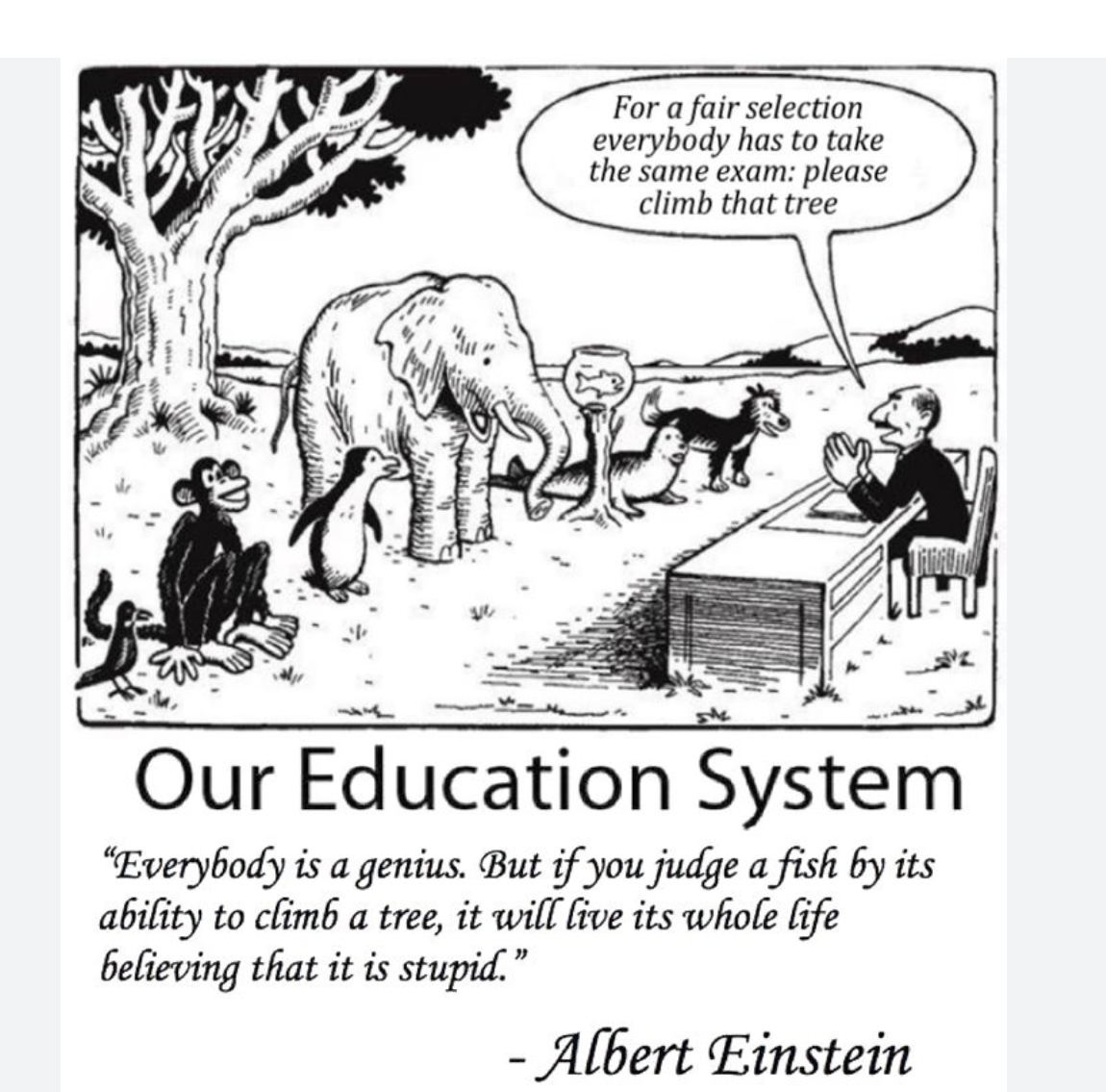
Our Students are More than a Test Score

 I recently read an article in Civil Beat titled, "Hawaii Charter Schools Say Test Scores Don't Tell the Whole Story."  I know that many - if not all - of the charter schools in Hawai`i are having a positive impact on their students and school communities despite their Strive-HI data. Students are engaged in hands-on learning, are often perpetuating their culture and their language, are involved in their communities, and are creating the kinds of caring leaders we need now and in the future. Though their test scores may not show it, students ARE learning.

I remember when I was a principal and had just completed a walkthrough at our school which went well. Our students were excited to share with our visitors about what and how they were learning.  During our post-visit conversation, there were many positive comments:  Your school is probably the most vibrant one we've visited. The kids are doing great things. The students are articulate and confidently shared their learning. And then this: But what about your test scores? There it was; the question I knew was coming. I was prepared with an answer, but I don't know if the visitors agreed. To them, test scores were the indicator for whether a school was successful. 

Our test scores were not bad. We were always in the middle of the pack when compared to other elementary schools across the State. Could it have been higher? Sure, but that was not our priority. We didn't ignore the fact that the tests were required. We prepared the students by having them take the practice test and having discussions about the questions and why an answer might be a better choice. Teachers encouraged the students to try hard and to not give up and taught strategies for test-taking,  But test prep was not emphasized and we definitely did not want our students stressing over a test which did not define who they were. 

At our school, we recognized that we are living in a fast-changing world. We wanted our students to have the skills they would need to be the problem-finders and the problem-solvers that our world needs. This slide show from 2014, created by our tech team, was shared with our school community about how our teachers and students were transitioning to a world where technology was viewed as a tool to explore, discover, create, and share. As I examined these slides, I was amazed at how our teachers and students were using technology at a time when it was not prioritized in our school system. 

When the pandemic disrupted schools back in 2020, many educators and students struggled to adjust to distance or virtual learning. Educators were forced to learn how to use technology to plan lessons and to connect with their students. They persevered and learned new strategies and tools; it was amazing! When the pandemic ended and school was once-again in-person, however, it seems that in many cases, technology is no longer a priority. The emphasis seems to be on learning loss and hiring tutors to provide more reading and math to raise test scores of students who fell behind during the pandemic. When will we realize that students are more than a test score? 

Technology does not come naturally to me, and I struggle to learn new ways of learning. I think that's true of many senior citizens. Our students, however, live in a far-different world than the one I grew up in, and our youngsters already use technology seamlessly in their daily lives. Except in school. Unless given the opportunity. 

Today, different forms of technology can change teaching and learning in our schools (7 Emerging Technologies That Will Reshape Education in 2023) but how many teachers know how to use these tools for themselves as well as for their students? Do schools have professional learning opportunities to share new technology for teachers and students  to connect and collaborate with others and to share their learning? Are schools providing opportunities for students to take classes on-line, not just for credit-recovery, but to gain experience with virtual learning? How do we engage students using technology and how can we provide a personalized educational experience for them? These are questions that schools should be discussing; our students need to be prepared for their world, one that is changing rapidly and where learning new technologies is essential.  

In this day and age, we should be looking at students through a wider lens. Test scores and grade point averages should not be the only way we define them. Instead, we should be asking questions such as: What do they want to learn? What are their strengths and their challenges? How do they learn best? How do they work with others? What interests do they have outside of school? How do they get their information? What are their goals? How can we making learning relevant for all students? 

Let's stop defining students and schools only by their test scores in math and reading.

This is one of my favorite videos to share with educators. It is four years old, and is probably already outdated, but the message is clear. Schools today need to prepare students for their future. Using test scores as a way to rank and judge students and schools ignores the individual strengths and interests of all students. Let's do better; our students deserve it!

Monday, November 6, 2023

Teaching Reading is More than Teaching Skills

This has been one of the more difficult blogs for me to write. I started over so many times. Reading is a topic I am passionate about, but as I read about back-to-basics, learning loss, NAEP test scores, reading wars, etc., I shake my head. 

Our world continues to change. There is so much more to learn about brain research, the "science of reading," AI and other technologies, social-emotional learning, socio-economic challenges and impacts on student learning, teacher preparation programs, etc. etc. But one thing doesn't change. Learning to read is important. But are we doing it right? If we are, then why are students losing skills they supposedly mastered earlier?

Schools are essential in our society. And reading is one of the most important skills that we acquire to continue to learn and grow. That is why teaching reading is emphasized in early childhood and elementary teacher education programs. But is there one "right" way to teach reading?

I don't think so. Every student is different. Every teacher is different. Every classroom is different. Everyone's experiences are different. So expecting everyone to learn to read in the same way with the same reading material and react to it in the exact same way is  . . . well . . . ridiculous. And yet, that is the expectation when students are all taught with “fidelity,” (I hate that word!) with the same reading program or materials even though students may be at very different points in their reading journey. 

Why is reading important? Why teach reading?
Reading proficiently is important if we want our students to be life-long learners who can choose what to read, who see reading as a way to learn more about a topic, to be entertained, to see different viewpoints, to put ourselves in the character’s shoes, 

This is why the years from 0-8 are so important in our students' reading journey. And as educators, this requires us to know our students - their strengths, their challenges, their interests, their lives both inside and outside of school, how they learn best, and so much more. We want our kids to see reading as a desirable activity. We want our kids to choose to read when they have free time. 

I think that in our effort to raise test scores, we have viewed reading as a series of skills to learn in isolation. Then we test students on that standard or benchmark and move on to the next skill. Is this what reading has come down to?

Are teachers given time to assess students, to listen to them read, or to work on skills that students are struggling with? Do we carve out time during the day for kids to choose what they want to read? Do students have regular times to visit the school library to explore the shelves and select a book they want to borrow? Do they even have a school library? (Read "It's More than a Place to Borrow Books." ) Do our students have opportunities to listen to adults share books they love? Are students able to pick their own book to read independently, or do we expect them to choose something "at their Lexile reading level"? (Hint: This can kill a child's love for reading.)

In his book, Literacy's Life Lessons, Steven L. Layne states that "aliterate individuals are those who can read but choose not to." When students claim that "they don't like reading,"  we need to work together to change their mind. It might mean choosing a book and reading it together. Get the child hooked, and they will hopefully want to continue reading it. We want our kids to know that reading is not just done in school, that it can be enjoyed for a lifetime, and there are so many books to choose from. And our students need to know that reading can open up whole new worlds, that there is so much to learn from books. As a parent and a teacher, I loved when kids came to me with, "Did you know . .  ? and when I asked where they got that information, the child proudly shared, "I read it in a book!" Parents have a big role to play in a child's reading habit, but schools are just as if not more important. Let's work together - home and school - to ensure that our children become life-long readers and life-long learners!


Tuesday, October 24, 2023

Eight Years Have Passed . . .

 Yesterday, we celebrated my Mom’s 96th birthday! It was a 4-generation celebration with kid-created Halloween games and activities at my sister’s home, a pot-luck dinner, and birthday cake and ice cream. It was such fun to get together and celebrate this special occasion!

Mom still lives by herself in the home she and Dad bought back in 1969. My siblings and I take turns bringing her meals and staying with her in the evenings. She is, for the most part, quite pleasant and we are grateful that she is generally in good health.. 

I wrote a blog post, “A Tribute to a Special Lady,” eight years ago. Our Dad had passed away two years earlier, and I regretted that I never told him know how much he influenced me as a Mom and a principal; I didn’t want to make the same mistake with my Mom so on her 88th birthday, I shared this blog with her. I know she was touched when she read it. When I published my books, she was visibly proud. That meant a lot to me.

I decided to publish this blog again because it is still meaningful.. Mom, like others her age, has been diagnosed with dementia, and she doesn't read anymore. But maybe I can read it to her and she will know how grateful I am to call her "Mom."


A Tribute to a Special Lady

Published on October 18, 2015

Tomorrow is my Mom's beiju, her 88th birthday, a special one for the Japanese. The beautiful thing about being in Hawaii is that despite being generations removed from the first immigrants from different countries, we still celebrate certain cultural events, and the 88th birthday has special significance.

My Mom is a private person so we won't be having a big celebration - just the kids, grandkids, and great-grandkids who live here in Hawaii. It'll be a nice time to gather to celebrate with this very special woman.

Grandma died during childbirth when Mom was just about a year old, so Great-Grandma Waka helped to raise her and her two older brothers until her dad remarried when my Mom was in the fourth grade. Great-Grandma Waka died just before I was born and my middle name is Wakae to honor her. My Mom sometimes reminisces about the things she did when she was younger, and I think I get my "tomboy" personality from her. She graduated from Mid Pacific Institute and Honolulu Business College and was working at Dole Plantation as a secretary until she met my Dad and got married. After that, while we were growing up, her main "job" was wife and mother.

Back when I was young, I didn't realize how much my mother shaped our lives. It couldn't have been easy; there are five of us siblings, and at one time, there were four children ages five and younger.Yikes! I look back and wonder how they managed on my Dad's paycheck, but they were resourceful. Dad had a garden where he grew a variety of vegetables that were served at dinner.The least popular was okra; Mom tried to cook it in different ways so we would eat it, but after that one harvest, Dad never grew okra again. There was a time when they bought chicks, and when they matured, we were in charge of collecting fresh eggs every morning. We lived in a plantation community so at that time, it was not a problem to raise a whole batch of noisy chickens.

Mom did all the right things to nurture our love of learning. We recited nursery rhymes, listened to stories and poems, sang songs, and made up games. We went on free field trips. We regularly went to the beach where my Dad went pole casting or diving. I didn't realize back then how lucky we were to have fresh fish for dinner, and during lobster season, we even had fresh lobster. When we got older, we helped Mom make musubis, veggie sticks, hash patties, fried chicken, and teriyaki for a picnic dinner. Those foods tasted extra delicious after a swim! We took trips to the mountains to pick guava or lilikoi that Mom often made into jam or jelly, and fern shoots or "monkey ear" which were then cooked with meat and other vegetables for dinner. We also took yearly trips around the island where we'd stop at certain beaches or natural attractions. Along the way, we'd sing songs or play games like spotting out-of-state license plates or a particular car color, or counting different service stations (Shell, Chevron, etc.). We were all competitive and hated to lose; that's how we all are to this day.

When I began school, I was the youngest in my class because I was born in December. I loved school, and at that young age, I decided that I was going to be a teacher when I grew up. But I was young, and my fine motor coordination was not up-to-par with the rest of my classmates. When we began handwriting in first grade (those were the days when kindergarten was more about social and emotional development than academics), the teacher said I needed practice. Every afternoon, when others were out playing, I had extra homework; I had to practice writing letters until I got them right. It was painful, and more-than-once, I cried at the injustice of it all. I really tried, but it was a challenge, and when I had to erase a letter, the newsprint often tore. I never asked my Mom how she felt about "forcing" me to do handwriting homework, but I'm sure she was glad when I finally "got it" and didn't need that extra practice.

When we were young, Mom sewed all of our clothes. We'd look in magazines or catalogs and pick out a style we liked, and she'd measure us, go to the store to buy material, draft the pattern, and sew it. At that time, I didn't realize how special we were to have one-of-a-kind dresses. The only store- bought dresses we owned were those we received at Christmas or birthdays from our grandparents or uncles and aunties. How I wish we had pictures of us wearing those dresses Mom sewed for us!

In their own way, our parents encouraged my siblings and me to do our best in school. Without putting pressure on us, we nevertheless got the message that we were expected to try hard in school and to go on to college. When my youngest brother was in school and we were old enough to take care of ourselves, Mom went back to work. After a number of temporary jobs, she began working for the Mililani Town Sales Office and quickly rose to the position of executive secretary. I'm sure our family could have used the extra money if Mom had gone back to work earlier, but we appreciate that during our growing-up years, she was there for us.

I went on to college and became a teacher and now, I'm a school principal. All of my siblings went on to successful careers in different fields. This is a tribute to the sacrifices Mom and Dad made when we were growing up as well as the experiences they exposed us to that shaped our lives and gave us the drive to make a difference for others.

Today, my Mom lives by herself since Dad passed away two years ago. My siblings and I take turns checking in on her, and she really enjoys those days when my sister brings her granddaughter over to Mom's to babysit. Mom is still recovering from a fall she took earlier this year, but being the proud person she is, she refuses to use a walker or cane. I know she'd love to go traveling again, so that remains a goal for her to get better more quickly.

I know that Mom is proud of her extended family, and tonight, we will celebrate her 88th birthday. The values she imparted in us, her five children, are now evident in her grandchildren and great-grandchildren.

Happy 88th Birthday, Mom!  We love you!


Wednesday, September 20, 2023

It’s Been Awhile

A couple of months ago, I casually mentioned to my husband that I might discontinue blogging. As a retired educator, I found myself questioning my relevance to today’s educators. Much has changed since July 2018 when I retired including a worldwide pandemic that schools are still recovering from. I worried that what I had to share was not what educators wanted or needed to hear. My husband asked me a simple question: “You tell educators that they should be sharing their stories,” he said. “Why would you stop blogging now?” Ouch! He was right. We all need to step back sometimes; I stepped back for a little over a month, and now, I’m mentally ready to write again.

Last week, I hosted an “Elevating Teacher Voice” blog study and discussion via Zoom on the What School Could Be communitySteve Shapiro read his blog, “If We Truly Care about Teen Mental Health” and we had a thoughtful discussion afterwards. This is an important topic, one which concerns me, one which high-achieving schools rarely talk about. They are focused on having the highest test scores in the district or having the most students who receive Advanced Placement credits, or having a high percentage of their students accepted to prestigious universities.

Many students in high-achieving high schools feel pressured to do everything possible to get into a “good” college. They take Advanced Placement (AP) courses, participate in athletics, take leadership roles at school, do service projects, and strive to be the best all-around student so they can get into the college of their choice. Unfortunately, in their effort to stand out, their physical, social-emotional, and mental health can take a toll. (Listen to this podcast which shares one young person’s experiences: “A Letter to My Younger Self with Emmy Huefner”) With all of their responsibilities, these students don’t have time to just relax or to pursue something that would impede on their schoolwork and activities. 

Participants in the “Elevating Teacher Voice” discussion shared what schools in their area have done to focus on students’ well-being such as limiting the number of AP classes a student can enroll in per year or doing away with class rankings. In his blog, Steve Shapiro shares six actions which schools, families, and the community can take to help students be happier and healthier, mentally as well as physically: 1) Slow down and cut back. 2) Center learning rather than grades; 3) Redesign school schedules to maximize opportunities for meaningful student and teacher relationships: 4) Increase opportunities  for students to do work in school that is interesting, meaningful, and satisfying; 5) Change the conversation about college; and 6) Work relentlessly to help students and parents redefine success.Great advice!

The value of a blog is the thoughtful discussion that it can generate, and I believe this is an important topic that impacts our students. Should school communities be preparing students to be who they want to be or what we want them to be? Do students have time to explore and discover what they are passionate about or what they’re good at, and are they given permission, time, and support to try different activities? Isn’t it time we agreed that a student is not defined by their test scores or grade point average or the number of AP classes they take or the number of colleges or universities they get accepted to? Let’s change what school could be - a place for deeper learning, a place where students learn with and from each other, a place where they can create and share their learning with others in their classroom, in their community, or even in their world. Our students deserve it.


A Note: With all the talk about AI and ChatGPT and education, I seriously thought about trying it out for this blog. I have seen people’s posts or writings using this AI tool; I was impressed. I’ve heard that it’s easy to use and can be a time-saver when writing things like letters of recommendation. If I were still working, I have no doubt that I would have tried it out already. But would AI help me to write a better blog? 

Writing a blog is personal, and although it might have taken me a shorter amount of time using AI, I believe that struggling through the process is what makes each blog post meaningful for me and a true reflection of my thoughts. ChatGPT will have to wait. 


Sunday, August 13, 2023

How Can Students Help?

 On Tuesday, August 8, we were traveling to Las Vegas to visit our son and grandsons. We took the red-eye, and when we met up with them for breakfast on Wednesday, our son asked if we heard about the fire in Lahaina. “It’s really bad,”  he said. “People were jumping in the ocean to get away from the flames.” It was difficult to believe. The TV was on in the restaurant, and we watched in disbelief. These past few days have been difficult as the number of fatalities keep rising and the photos and videos show a town that has been devastated and destroyed. In an island community like ours, people are all connected, and it’s hard not to know someone who has been impacted by the fire.

I remember the trips we took to Lahaina to watch the boys play tennis years ago. I remember the trip Randy and I took back in 2006, walking through the town and seeing the iconic banyan tree . I remember our trip to Maui in 2017 and our walk through historic Lahaina town (read my blog here). Most of the landmarks I recall are now gone. 


Randy and I visited the museum and the courthouse on our last visit to Lahaina. So many artifacts and historical pieces were lost in the fire. 

We were discussing this tragic occurrence with our grandsons. What caused it? Could it have been prevented? How has climate change impacted our world, and how can we prevent another Lahaina fire, not just here in Hawai`i, but in other parts of the world? I recall visiting Maui a few months ago and seeing so much land that is now vacant once the sugar and pineapple companies left the island. What other ways can we use that agricultural land? We are the most isolated land mass on Earth, and we need to learn from this tragedy as Lahaina is rebuilt.

I recall the students at our school making a difference for others - 3rd graders doing chores around their home and collecting funds for the Red Cross after Hurricane Sandy; 3rd and 5th graders collecting items for homeless shelters; 1st graders spearheading a school-wide school supplies drive for students at a school in Houston after Hurricanes Harvey. These are just a few of the projects our students were involved in to show empathy for others who had or were experiencing major challenges in their life. 

Students learned about “wants and needs” via this project to help students their age who were impacted by Hurricane Harvey. 

Hawai`i residents are already donating goods and opening up their hearts and their wallets to the people of Lahaina who are and will continue to be impacted by this tragic fire. As an educator and a former principal, I hope that schools from around Hawai`i and the country will see this as an opportunity to have students ask questions, come up with ideas, and to make a difference for Lahaina. Four schools have been impacted by the fire (Hawaii News Now report) and King Kamehameha III Elementary School was completely destroyed. I remember seeing the school on my last visit to Lahaina. The school has and will continue to have a long and honored history (Read about the school’s history here.). This is truly a school that has the support of its community. 

I often share this Native America quote: “We don’t inherit this world from our ancestors. We borrow it from our children.” Our young people are much more aware of the problems we face in our world today. They will be the problem-finders and creative problem-solvers we need to make this world a better place for all of us. Schools can be where students can become passionate and active learners to truly make a difference in our world. They should be asking questions, searching for answers, discussing, collaborating, sharing, and gaining the skills they need to be contributing members of our society. 

That’s what school could be. Let’s work together to make school relevant in this changing world. 


Monday, August 7, 2023

My Request to Teachers

Recently, I had the opportunity to share my message at an intermediate school here in Hawai`i. The title of my presentation was “Educating with Aloha,” a reference to my book where I describe aloha as “love, compassion, empathy, and respect.” I shared the slide below and talked about how important it is to build positive relationships - teacher with students and students with other students - from the first day of school. We talked about how important a safe and trusting environment is where all students feel that they  belong. Finally, I encouraged teachers to get to know their students’ strengths, interests, and talents and to work with them from a strengths-based lens rather than a deficit-based one. Teachers then shared strategies they use to build community and a sense of belonging in their classrooms from day 1.


 I know things are tough and many teachers have left or are leaving the profession. Those of us who have committed our professional lives to educating and working with young people have, I believe, a responsibility to mentor and collaborate with other teachers to ensure that our students have the best educational opportunities to impact their future.

According to a recent study, teacher responses indicate that “meaningful work” and “colleagues” were the top two reasons to stay in the profession. Those of us who spent many years as educators realize the positive impact we can have on our students and how we can make a difference in their lives. What could be more meaningful than having a positive impact on our young people and helping them to realize what they can do to make a difference in the lives of others? 

A recent study indicated that only 10% of educators would strongly recommend the profession to a young adult. I realize that there are many reasons for this including compensation, work load, and insufficient support staff. However, our world depends on educating our young people. I am very concerned about the future of education when teachers don’t see the profession favorably. 

 I shared this slide during my presentation.


I changed one word (in red) in my previous slide. What works for our students in their classrooms - positive relationships, a safe community, a sense of belonging, and honoring the strengths and interests of the staff - should also be applied to teachers in their school. Good ideas become great when teachers collaborate to create lessons or projects to meet the needs of their students. New teachers to the profession or the school should be welcomed for what they can offer, and veteran teachers could be their “marigold,” someone to go to with a question or just to chat after the day is over. And just because the teacher is brand-new doesn’t mean they have nothing to offer. I know that many experienced teachers relied on younger teachers when the pandemic hit and schools went virtual. These veteran teachers learned of the many online resources available and became more comfortable teaching via Zoom or another virtual meeting site. 

Back in 2019 in our pre-COVID 19 world, I wrote this blog (Will Teachers Become Obsolete?). In this challenging post-COVID world, I am very concerned about the number of teachers leaving the profession or how young adults are discouraged from becoming teachers. This is why I encourage all teachers in a school to commit to  building positive relationships and a caring community of support where everyone feels they belong and can contribute. 

Here is my request to teachers. At the end of the day, reflect on something positive that happened. It could be something that doesn’t seem like much to someone else, but it means a lot to you. Maybe a student spoke up in class for the first time. Maybe that challenging student thanked you for caring. Maybe a lesson went exceptionally well and the students didn’t want to stop for lunch. Then go and share it with someone - another teacher, the student’s parent, a counselor, your principal. Imagine if every teacher did this at the end of the day. We would realize that there are so many positive things we could share and celebrate! Of course, we know that there will be problems as well, but if we can focus on the positive first, we may realize that the challenges are less challenging.

Our children are our world’s most precious resource. We need teachers who will advocate for their students and for the profession. Our children deserve it!