Sharing my thoughts about education and life after retirement


Well, the final run for Coach Mike Krzyzewski is over. Yesterday, Duke University lost to the University of North Carolina in an epic Final Four basketball semifinal.
I was cheering for Duke to win one last championship for their coach. I was cheering for Jarand, an avid Duke basketball fan since I'm-not-sure-when. I can only speculate about when he became a diehard Duke basketball fan. The year was 1994 and Jarand was a sophomore in high school. Duke was coming to play in the Rainbow Classic at the Stan Sheriff Center on the University of Hawaii campus. I don't know how Jarand got there because he didn't have his license yet, but somehow, he was there when the team bus drove up. I'm not sure how Jarand got up the nerve but he went up to Coach K and asked him to sign his cap. Coach K obliged, and that made Jarand a fan for life. Earlier this year when Coach K announced his retirement, I looked for that cap in Jarand's room. I couldn't find it so I asked Justin to check at his home since some of Jarand's things were still there. He did find the cap but he said the signature was no longer readable.
There are a lot of Duke haters out there, but I am not one of them. I think it has more to do with the respect I have for Coach K. I remember reading an article a few years ago about their big rivalry with UNC. It was a home game and the Duke fans were loud and rowdy. Coach K got on the microphone and quieted the crowd, telling them that this was their home and UNC were the visitors and we treat visitors to our home with respect. That speech stayed with me all these years. I also read a heartwarming story about a boy with Down Syndrome who sat behind the Duke bench for 37 years because of an invitation from Coach K.
The college basketball game has changed. It is unlikely that Duke will have players like Bobby Hurley or Grant Hill or Christian Laettner who played there for four years. No longer can Coach K refuse to raise an NCAA Championship banner at Cameron Gym if any player on that team does not earn a college degree. Now, it's one-and-done as star teenage basketball players bolt for the NBA. Coach K has had to adapt to the changing times. That is what leaders do.
Mike Krzyzewski coached at Duke for 41 years. What a commitment to the school and to all the players he coached! He also coached the US Olympic Team three times, and as this article explains, he needed to adapt to coaching the best professional players in the NBA and turn individual stars into a unified team. He knew that what worked with his college kids wouldn't work with superstars like LeBron and Kobe. Critics questioned the decision to name Coach K as the Olympics coach, but three gold medals proved he was the right person, the kind of leader the team needed.
I would have loved to see Mike Krzyzewski go out with another NCAA basketball championship, but I know his legacy will continue. Hopefully, those he impacted will remember the lessons they learned from him.
There are lots of quotes attributed to Coach K. These are some of my favorites..
What a magical moment, spending time this morning with Jennifer Lee's first graders at Haleiwa Elementary School! I shared a little bit about Jennifer's classroom in an earlier blog ("In Every Crisis Lies the Seed of Opportunity") and today, my husband Randy and I visited to experience the butterfly garden, first-hand.
It started when a caterpillar crawled into their classroom, and the idea for a butterfly garden grew from that one serendipitous moment. Jennifer shares that the students were excited and had so many questions, so naturally, she saw this as an important learning opportunity. By accessing grants as well as community partnerships, the students have become experts and proudly answered our questions and explained different aspects of their garden. They pointed out teeny tiny eggs on the bottoms of milkweed or crown flower leaves. They found caterpillars of all sizes and placed them gently into habitats where they could observe the transformation into butterflies before being released. They separated the milkweed seeds so they can plant more milkweed plants, a favorite food of the monarch butterfly. They asked questions, did research, and wrote their own information books about the monarch butterfly. And they are discussing how they can sustain the project by selling products at an upcoming school Pop-Up Fair. A couple of their ideas are selling a make-and-take habitat for a caterpillar so families can observe the life cycle or selling the milkweed seeds they have laboriously collected in a jar to grow more plants for food for monarch butterflies..
I would not have known about this butterfly garden if I hadn't crossed paths with Jennifer on one of our daily walks. We talked and her excitement was so infectious. Jennifer sent me a few photos along with an invitation to visit. I am so glad we took her up on her invitation.
So many teachers are like Jennifer. They are doing great things in their classrooms, but as teachers, we don't often have opportunities to learn with and from others except with those at our own school. A few years ago, teachers had "professional development leave" and they could attend a conference, visit other schools or classrooms, work on their university coursework, or participate in other professional learning opportunities. I know our teachers took advantage of this PD leave, and we supported and encouraged them to do so. Alas, a few years later, that PD leave became "personal" leave.
There are many teachers like Jennifer who welcome visitors and who would love to hear new ideas from their colleagues from other schools. Wouldn't it be wonderful if teachers had professional learning days in addition to their sick leave and personal leave days? Perhaps teacher professional development should be more personalized and include opportunities to learn with and from others, to discuss challenges and to try out new ideas, and to learn from others including colleagues from other schools. In this day and age, we should be able to collaborate instead of everyone trying to reinvent the wheel.
And if you get the opportunity, go visit the butterfly garden at Haleiwa Elementary School!
P.S. Do you know how to tell which side is the head of the caterpillar? Do you know how to tell if a monarch butterfly is male or female? I learned something new from the students today!
When I was preparing to retire in the summer of 2018 after 45 years as an educator, I wasn't really sure what I would do with the rest of my life. I knew that I would continue to follow education issues but I did not have any specific plans. Then our world turned upside-down. Our middle son, Jarand, was diagnosed with Stage 5 Chronic Kidney Disease in January and a scant five months later in May 2018, he passed away peacefully in his sleep. He was 38 years old with the whole world ahead of him (Aloha, Jarand) I was devastated.
It was Jarand's passing that that gave me my purpose, post-retirement. My husband Randy and I made it a point to learn what we could about CKD and to share our message with others, especially with young people like Jarand. When I wrote my first book (Leading with Aloha: From the Pineapple Fields to the Principal's Office), I donated a portion of the proceeds to the National Kidney Foundation of Hawai`i for education programs, and when Randy and I spoke with groups to promote my book, we always ended by sharing about Jarand and telling those in attendance that they needed to take care of themselves so they can take care of others. The message resonated, but I felt that it was just for that moment. Without more information, people don't necessarily make changes in their lifestyle that could lead to better health.
This is why Randy and I were honored to be asked to serve on the NKFH Kidney Walk 2022 committee to bring awareness to this disease. It was a first-time event, and the goal was to raise funds for programs to educate the public and to provide support for those who were struggling with kidney disease. We sent out letters to friends and family and invited them to contribute and to participate in the Kidney Walk. We were able share Jarand's story via a video produced by a good friend, Marvin Buenconsejo, and we continue to tell people about Chronic Kidney Disease.
The NKFH Kidney Walk took place yesterday, and it was a great success. The number of participants as well as the amount collected for NKFH exceeded expectations. I was pleased to see so many people of all ages walking the 1.7 mile route and visiting the booths to learn more about taking care of their health. I saw several groups with shirts that were made for the Walk, and I talked to a young mom and asked her who she was walking for. She said she was the one with CKD Stage 5 and that she was undergoing dialysis. She recognized me from the video and thanked me for sharing the message about CKD. I wished her the best; she has two young children and my hope is that more people like her can live full lives despite their CKD.
I know that much more needs to be done, and Randy and I will continue to share the message about Jarand and Chronic Kidney Disease. I feel that every time we share Jarand's story, we have the opportunity to make a difference for other families. That is why I continue to support the National Kidney Foundation of Hawai`i. I believe that Jarand lives on if others hear his story and decide to take better care of their health. That is my hope.
If you'd like more information, visit the National Kidney Foundation website at kidney.org or check out the articles below.
Chronic Kidney Disease Takes Heavy Toll in Hawaii
Kidney Disease: The Basics
Back in July 2019 after my first book was published, Kristi Oda messaged me and asked if I would share my writing journey with the Hawai`i Educators Write group. These educators got together once a month at the Entrepreneurs Sandbox in Kakaako to support each other in their writing projects. It was a nice, friendly group which immediately put me at-ease. It was wonderful to see educators who were already writing and sharing their messages publicly. At the time, Kristi mentioned that they were hoping to expand this writing opportunity to the neighbor islands.
When the pandemic shut down in-person events in March 2020, HEW went virtual. These educator writers continued to set aside the last Wednesday of every month to write and meet virtually. Today, March 5, 2022 was the first in-person event since the pandemic began. HEW hosted a retreat at beautiful Kane`ohe Elementary School, and I was excited to see how much the group has grown!
I recently read this thoughtful blog post by Kristi Oda titled, "The Viability of Virtual School." She raises questions that must be considered if legislation is passed to fund a virtual school here in Hawai`i. Kristi asks: What if we can design online learning that can adequately serve the medically fragile in time of need, differentiate across the ocean and sharpen students whose career pathway requires more significant online expertise? How can we go beyond considering and move to effectively organizing a permanent Virtual School for an even more robust system? Does Hawaii need to ground our vulnerable and precious youth community in an inclusive space where we can learn how to connect, care for and share life with our fellow humans of diverse backgrounds? Great questions, moving forward.
I agree that the Hawaii Department of Education needs to offer more options for students. The pandemic pointed out that in-person learning cannot be the only option. With so many colleges and universities offering on-line coursework and degrees, it makes sense for our public school students to have that option as well. Our son completed his military service and obtained his university degree on-line. I speak with the baristas at our local Starbucks, and many of them are attending on-line universities while they are working. The beauty of virtual school should be the flexibility it affords to students who manage to juggle school, work, family, or other responsibilities.
This school year, the Leilehua-Mililani-Waialua Complex Area is piloting virtual or distance learning for elementary school students via the Pineapple Academy. A teacher is assigned to each grade level and students enroll from any complex area elementary school. They meet daily, except that it's a virtual classroom, not face-to-face. Creating a classroom culture is just as important for these distance learning classes as it would be in a face-to-face classroom. Their model could be replicated in other schools or complex areas.
Another option for schools or complexes to consider is blended learning where students come to school for part of the week and work virtually at home on the other days. This means that students have in-person connections as well as virtual connections with their teacher and their peers.
Back in 2011, our school had a huge increase in the number of students primarily due to the completion of brand new homes in our geographical area. We were able to apply for and receive a Department of Defense grant to pilot a blended learning program where students spent three days of the week at school and the other two days at home. This allowed the two blended learning teachers to share a classroom when we were severely overcrowded. The program allowed for flexibility; for example, when teachers noticed that students were struggling, they could ask them to come in on their at-home days to provide additional support. On October 4, 2012 after the first quarter, I wrote this about our blended learning classes. Our fourth and fifth grade blended learning classes are blazing trails! The teachers have created a rigorous and relevant curriculum which challenges students to be self-directed, critical, and creative thinkers, and students have exceeded expectations with their ability to adapt to this new means of learning. I had the opportunity to view some of the individual projects, and I was amazed at the work of some of these students when given the chance to explore something they wanted to learn more about. I look forward to seeing these students continue to blossom as they take charge of their own learning. In December of that year, I shared about the blended learning classes in a blog titled "Virtual Learning."
We would have loved to continue and even expand the blended learning program at our school, but we ran into a couple of roadblocks. First, the grant funds were time-limited, and we were not able to support the program using only State funds despite the fact that we had more students in our second year than in our first. More importantly. our parents were very interested, but because of the transient nature of our military-impacted community, we did not have the necessary number of students to sustain the program after our grant expired.
We were ahead of our time. Now that most students have had experience with virtual or distance learning, parents may be more open to the idea of having their child in a blended learning classroom. In this 21st century world, critical thinking, collaboration, communication, and creativity are the 4C's of a successful learner, and our blended learning students had many opportunities to demonstrate these attributes. They were truly a learning community.
Kristi shares this question in her blog: "Youth need love and experiences of a communal classroom to belong to and thrive away from their home environment and I wonder, can the online one sustain them?" It is possible. The Pineapple Academy and our blended learning classes are proof that students can thrive in an online environment IF there is an emphasis on relationships between the teacher, students, and families and IF technology is used as a tool for learning for students to explore, discover, create, and share. This is what good teachers do whether it's face-to-face, blended, or a virtual/distance environment. The pandemic has afforded schools opportunities to be creative and to try new ideas. I would love to see blended learning as an option for students and families in our Hawai`i public schools!
This week, I had the opportunity to speak with school leaders in Hawai`i and I shared that despite the Covid crisis, teachers and schools are doing amazing things. Out of this crisis came opportunities to try new ideas and to do things differently with their students. I shared a number of examples.
In the spring of 2020 when schools suddenly pivoted from in-person learning to distance learning, many teachers were unprepared. Yet, they quickly learned how to use new technology tools such as Padlet, Seesaw, Google Classroom, and Jamboard to communicate with and engage their students and families. They discovered other tools they could use as well for different subject areas. Now that most schools have returned to in-person learning, teachers have new resources to use to integrate technology into their classrooms. The beneficiaries are the students and the teachers.
Lianna Lam, Kaimuki Middle School teacher, shared a Padlet she had created for their STEAM Innovation Lab which opened to the whole school community during the pandemic. There are hands-on activities for students, teachers, and families to explore and discover. This STEAM Center activity she shared shows how students at her school are concerned about problems in our community. They will be exploring an important question about restoring and conserving our fresh water. These middle school students are getting a head start on examining environmental and social problems that impact the quality of our lives.
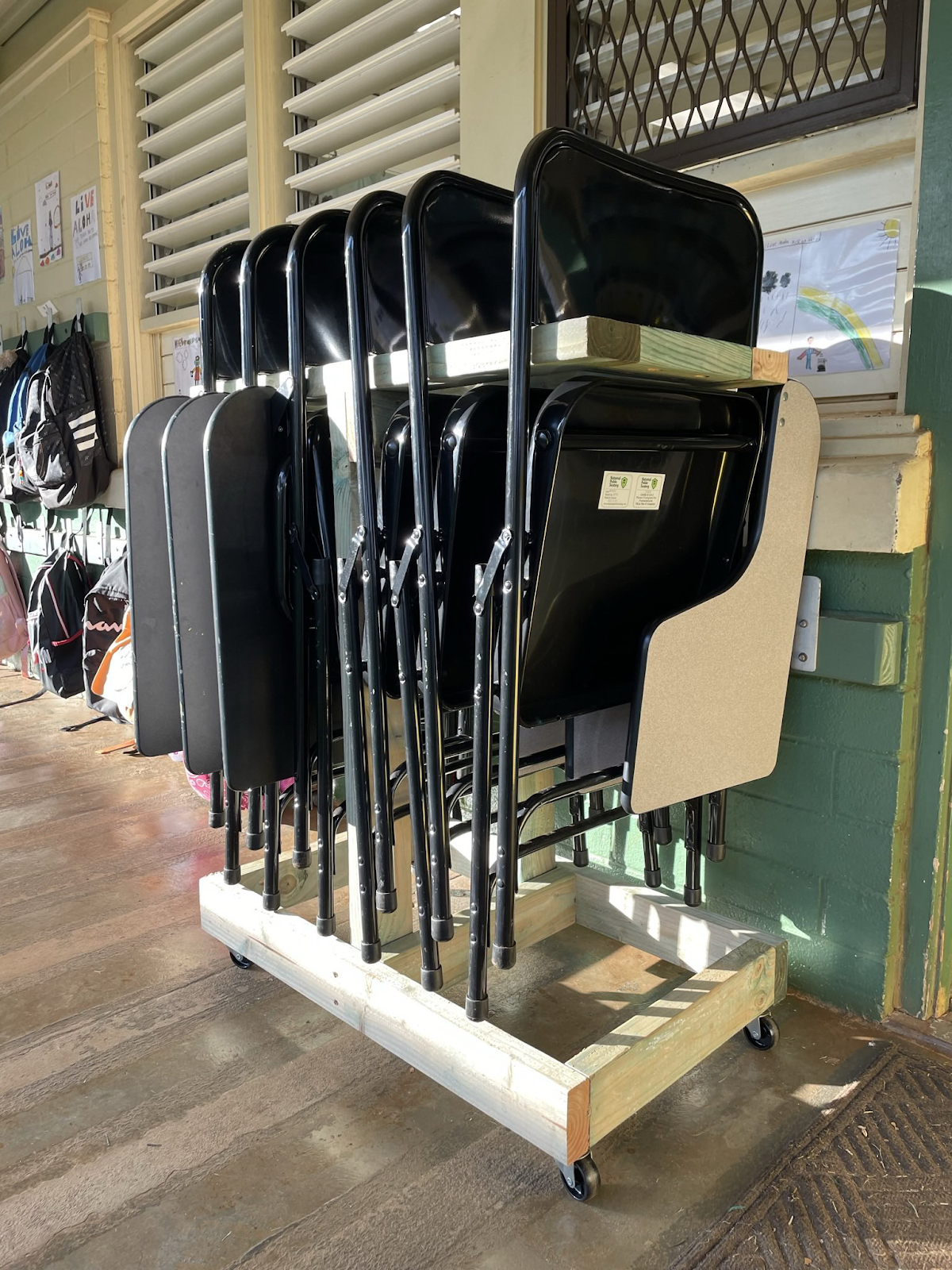
Derek Minakami, principal of Kane`ohe Elementary School shared this on Twitter: "Social distancing necessitates that 1/2 of each upper grade classroom eat outside their classrooms. A 4th grader got fed up with the metal folding chairs falling down when stacked against the wall & designed this device to hold the chairs." The fact that a fourth grader would be able to see a problem and design then build a solution is a testament to the school and the educators who encourage meaningful and real-world thinking processes. Amazing!
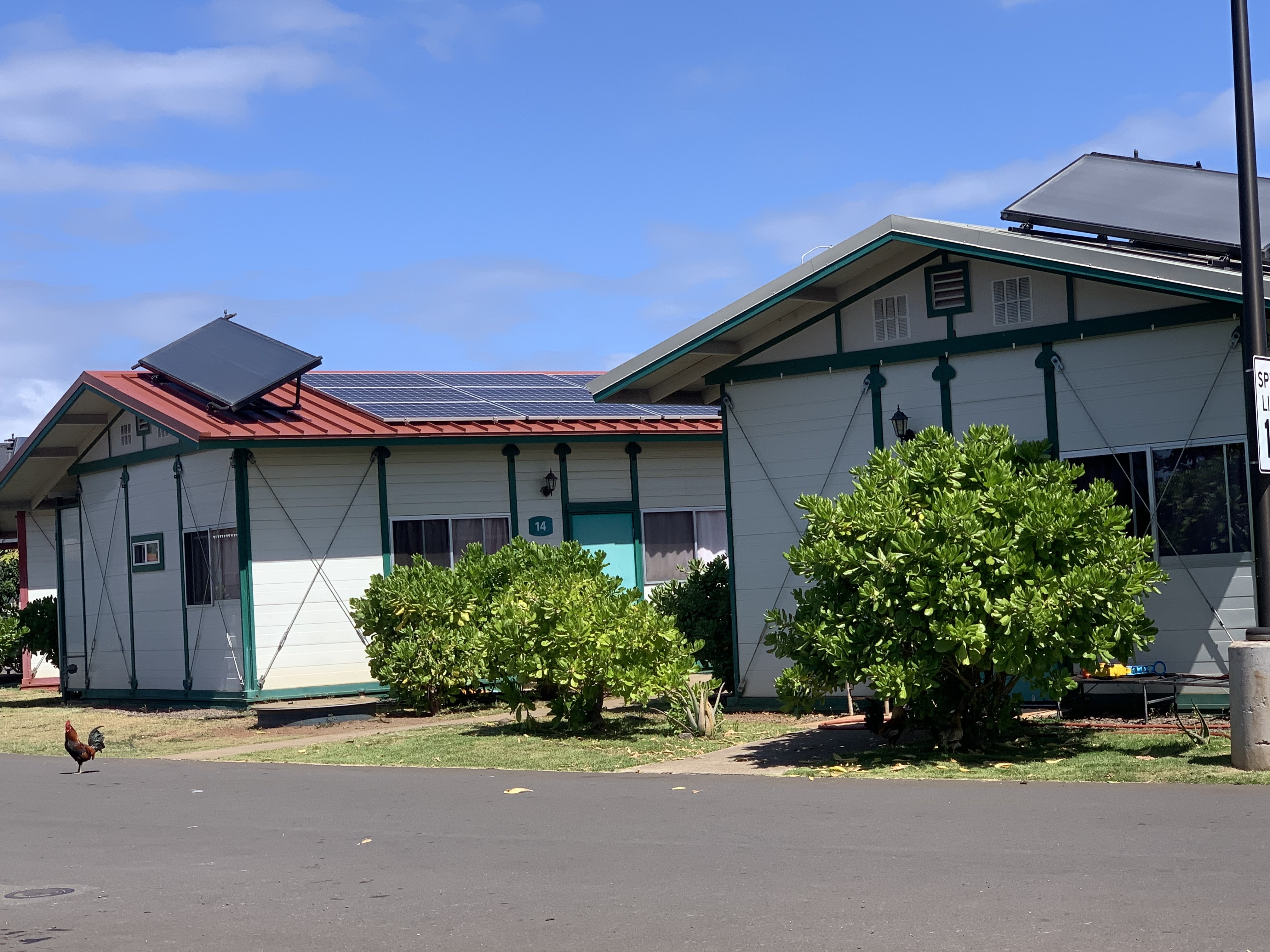
When school resumed for in-person learning, many schools created outdoor spaces for classes to meet because it was safer than being indoors where Covid germs were more likely to spread. Jennifer Lee, a first grade teacher at Hale`iwa Elementary School shared that much of the teaching and learning in her class these days is outdoors. Her students love working in their vegetable garden as well as their butterfly garden. They are becoming keen observers and are learning so much by being in their outdoor classroom. They are not only raising butterflies, they are also growing food. The kids are reading, writing, sciencing, learning math, and learning to work together on their projects. Jennifer's excitement when she speaks with me is contagious; I can't wait to visit her classroom!
The Leilehua-Mililani-Waialua complex area knew that some parents would want an option for their elementary school students, so the Pineapple Academy was created to provide distance learning. Students are enrolled from different schools in the complex area, and a teacher is assigned to each grade level. Teachers plan activities to address grade level standards, and students meet with their classmates and their teacher daily. From all I have heard, the Pineapple Academy has been successful. Students are thriving, parents are very satisfied, and the teachers have learned so much from this experience. Hopefully, the program will be expanded to create more distance learning opportunities for students, not just in the Leilehua-Mililani-Waialua complex area but throughout the state as well.
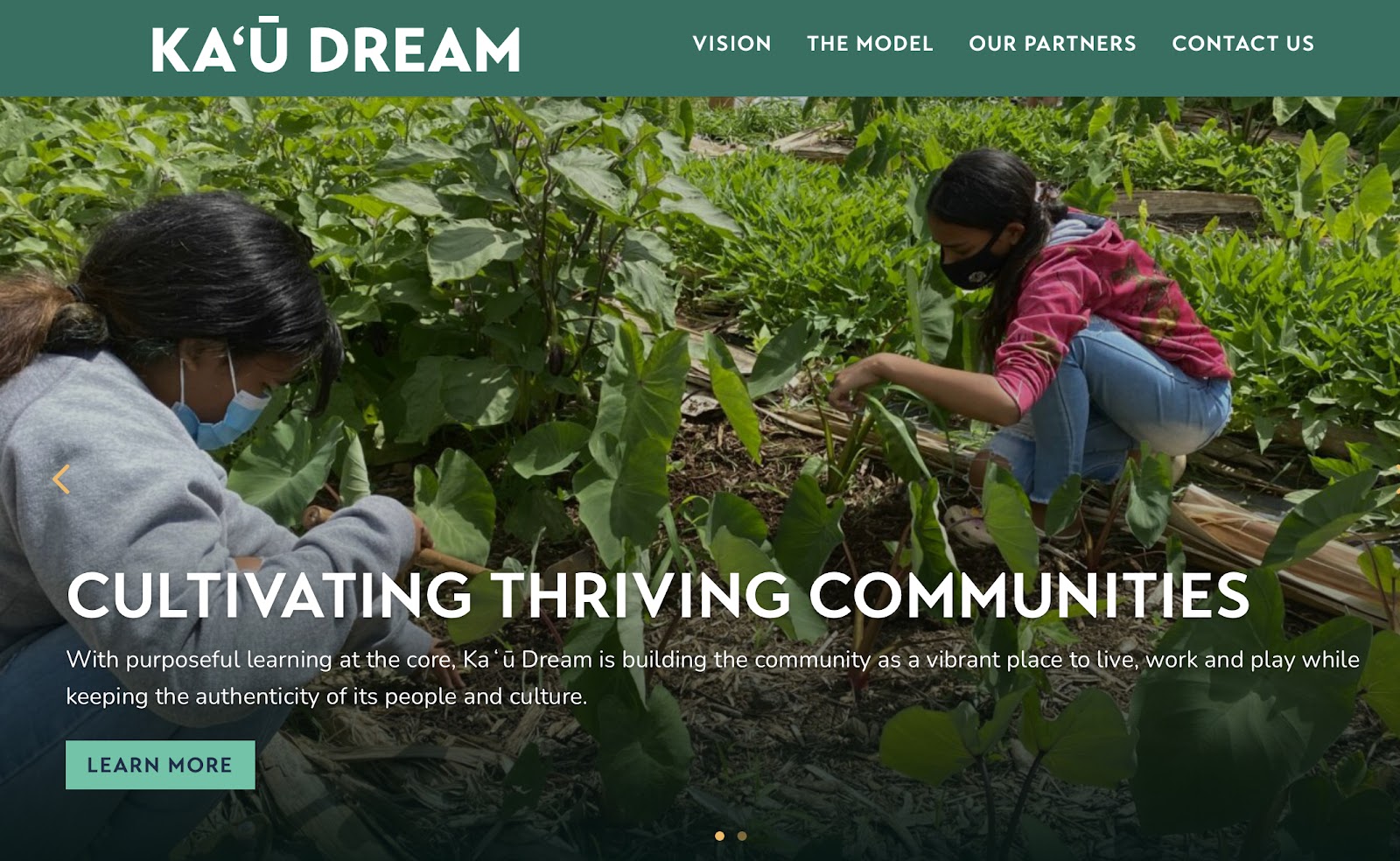
I shared about Ka`u Dream at Ka`u High and Pahala Elementary School in an earlier blog. This is a project that has the potential to revitalize the Ka`u community, and it is so exciting that the school is at the center of the changes.
As the Chinese proverb states, "In every crisis lies the seed of opportunity." I am sure that all schools have examples of being innovative despite the challenges of teaching during a pandemic. It's time for schools to share these successes!